
Ummmm? Why does my home manicure look like it's been smeared on by a small child? Knowing how to paint your nails is truly an art form. Even though those pro manicurists in the salon make it look easy, the reality is that they know the intricate techniques that deliver an immaculate finish like the back of their perfectly painted hands.
Whether you want to cut back on salon trips, or you simply prefer to do things yourself, there's never a bad time to master doing your own manicure at home.
We asked celebrity manicurists to take us behind the scenes of how to paint your nails exactly how they do. Follow along for a mani so good you'll have people asking for your salon's address.
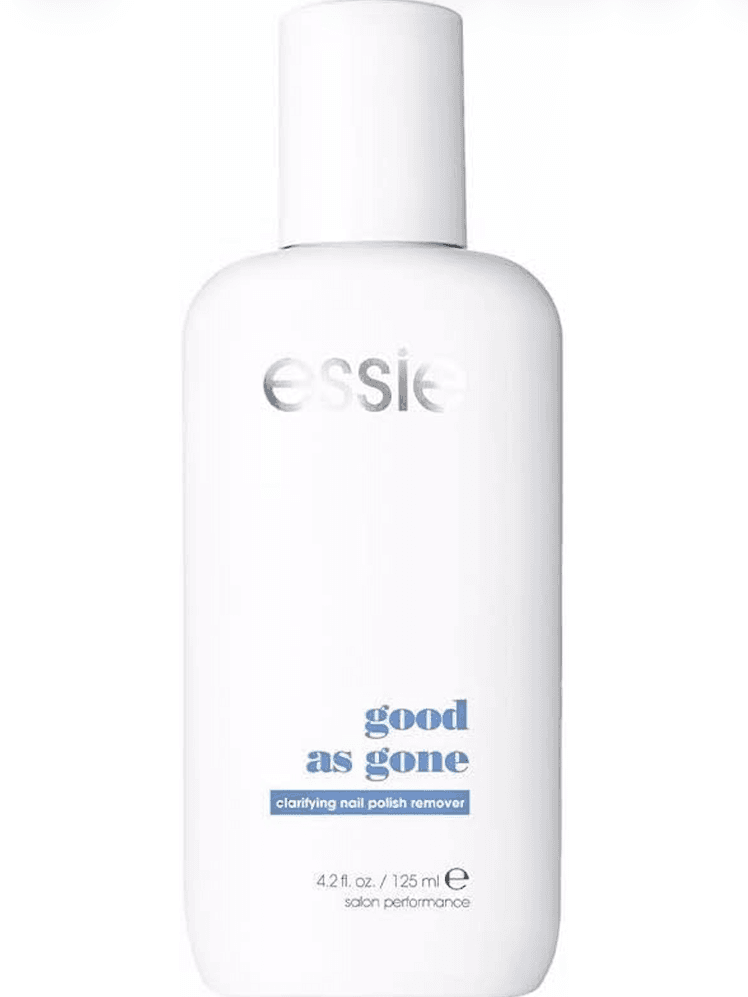
To get a great manicure at home, do as the pros do by spending as much time prepping your nails as you do polishing them. That means starting with a good nail polish remover like Essie Good As Gone. It quickly takes off all polish (even glitter) and has essential nutrients to help strengthen your nails and moisturise your cuticles. Make sure your nails are ultra clean, any leftover polish will mean your polish looks less smooth. Even if you don't have polish on, you'll still want to run a cotton ball of remover over each nail to get rid of any oils or dirt that could warp your polish. Don't forget to wash your hands with soap and water after.
Clip nails first, if necessary. Then file gently moving in one direction to get your desired nail shape (square, almond, oval, or somewhere in between). Harsh filing back and forth can splinter the nail, so it's best to move gently from the outside to the centre and consider investing in a glass or ceramic file which aren't as rough. Have thin nails? Try this tip we got from celebrity manicurist Deborah Lippmann: Hold the file flush to your nail and tilt it so you file from slightly underneath. "This allows you to see exactly what you're doing and helps protect against over-filing," she says. Finally, buff the tops and sides of your nails lightly with a nail buffer—not your emery board—to create a smooth surface. "If you don't buff, the natural oils in your nails can build up, leaving manicure-ruining residue on them," says Rita Remark, Essie global ambassador. "Buffing your nails is kind of like brushing your teeth—it's brightening, it makes nails look more youthful, and it gets rid of ridges."
Tweezerman Glass Nail File
Mylee White Nail Buffer Sanding Block 220/240
Prep cuticles with cuticle remover (make sure it's not an oil or balm) to help dissolve dead skin and soften the area. Contrary to popular belief, cuticle oils and cuticle removers are not one and the same, nor can they be used interchangeably. Oils help moisturise, while removers act like an exfoliating treatment for your nail beds. Then, push back gently with a cuticle stick. We love these manicure sticks that are also the best for cleaning underneath nail tips. Your cuticles protect your nails from bacteria and keep them soft, so avoid cutting them.
Brushworks Cuticle Crystal Sticks
Apply a base coat to hydrate and protect nails and prevent chipping. Then chill for a few while that dries. Nail guru Essie Weingarten, founder of Essie, recommends waiting two full minutes between each coat, starting with the base coat. Try Essie Here to Stay to lock colour on and keep it from staining your nails.
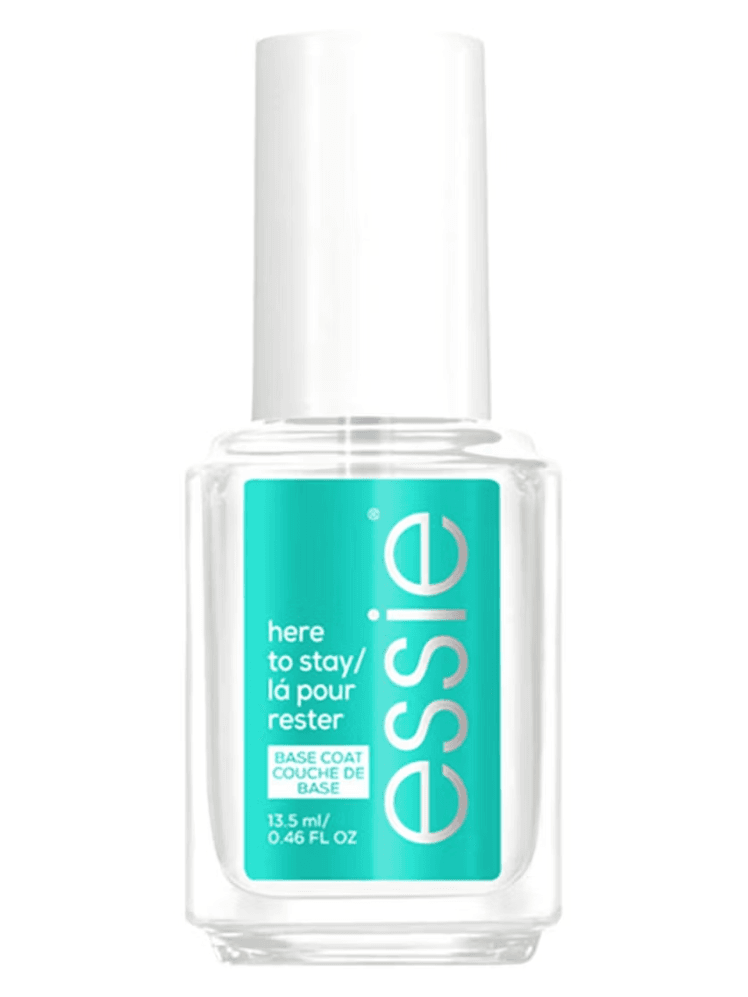
Essie Nail Care Longwear Here To Stay Clear Base Coat Nail Polish
Now for the fun part. Apply a coat of your colour of choice, being sure to get the brush all the way down to just the cuticle and into the corners of your nail. Maximum coverage on the first coat makes the second coat a breeze. Just keep the layers thin. This is arguably the most important step. Here's how to do it right.
-Bead in the middle
"Pull the brush from the bottle scooping a small bead of polish on one side. Place the bead in the centre of the nail to avoid flooding the cuticle then lift the brush up and ease towards the cuticle line," says CND's Global Education Ambassador Nataliya Al-Ta’ai. "This technique allows the brush to fan out for precise application – a tiny margin should be left between the cuticle and the polish. Glide the brush from the cuticle back up towards the free edge [that's the top of your nail] to complete this stroke, leaving even coverage on the centre of the nail," she adds. Basically, you don't want to get polish on your cuticles or the edges of your nails as this looks messy.
"Many of us overload the brush and do too many strokes," agrees Nails Inc. founder Thea Green. "The key is to load just enough polish on the brush to cover the nail in one coat." She recommends striping your nail three times: once down the middle and once on each side (see below).
-Rotate right
"Rotate the finger right and use the left side of the brush to apply colour over the left side of the nail. Follow the contour of the side wall as closely as possible from the cuticle line to the free edge. Do not re-dip the polish for this as there should be enough polish to cover the nail completely," sats Nataliya
-Rotate left
"Rotate the finger left and using the right side of the brush apply colour over the right side of the nail. Once again, follow the contour of the side wall as closely as possible from the cuticle line to the free edge," Nataliya says.
-Seal the edge
"Remove excess polish from the brush on the side of the bottle and apply a thin line of colour along the free edge to seal it and ensure complete coverage," says Nataliya. "This will help to prevent the polish from lifting if you bump your nails, so it'll stay in place far longer," she adds.
-Repeat and refine
After a full two minutes (set your iPhone timer if you know you're going to cheat), apply the second coat of nail polish.Repeat the steps above to provide additional coverage "any free margins can be perfected with the second layer," says Nataliya. Sheer or pastel shades may require a third coat for full, seamless coverage, but remember: while thick layers may cover your nails more quickly, they're also more likely to end up with imprints or chips, so stick to lightweight layers.
As for nail colour, Essie never lets us down, OPI has some of our favourite shades, CND gives a salon-worthy finish and Manucurist is gentle on battered nails.
Essie Nail Polish in 374 Salt Water Happy
OPI Nail Lacquer in Bubble Bath
CND Vinylux Long Wear Nail Polish in Black Cherry
Manucurist Green Vegan-Friendly Nail Polish in Moon
A top coat protects your manicure from chipping and adds shine to nails—don't skip it, or you'll significantly shorten the lifespan of the paint job you just worked so hard on. A word of warning, be careful when you put your top coat on, since a messy application can ruin your entire manicure. "I see this all the time," says manicurist Madeline Poole. "Women think, it's clear—you can't tell. But really, you can once it dries." The reason? Shrinkage. "Topcoats tighten as they dry, which is what can cause those little ridges if you don't put it on properly," Madeline explains. To give nails that truly mirrorlike gleam like you get at the nail salon, follow that up with a separate shine enhancer like OPI Infinite Shine Gel-Like Top Coat.
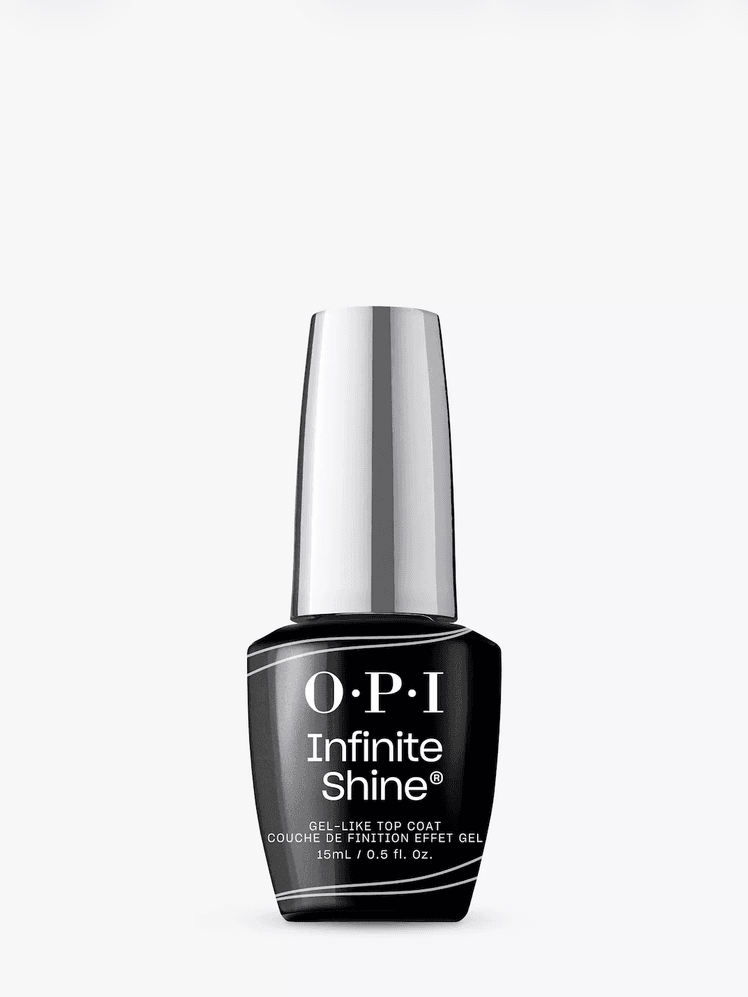
OPI Infinite Shine Gel-Like Top Coat
Tidy up any mistakes or wobbly edges by wrapping a piece of cotton ball soaked in nail polish remover around the end of your cuticle stick and carefully trace around your nails. If you have nail polish remover pads, try folding one into a triangle for a more precise application. Then let your nails dry an additional five minutes—it'll be worth it.
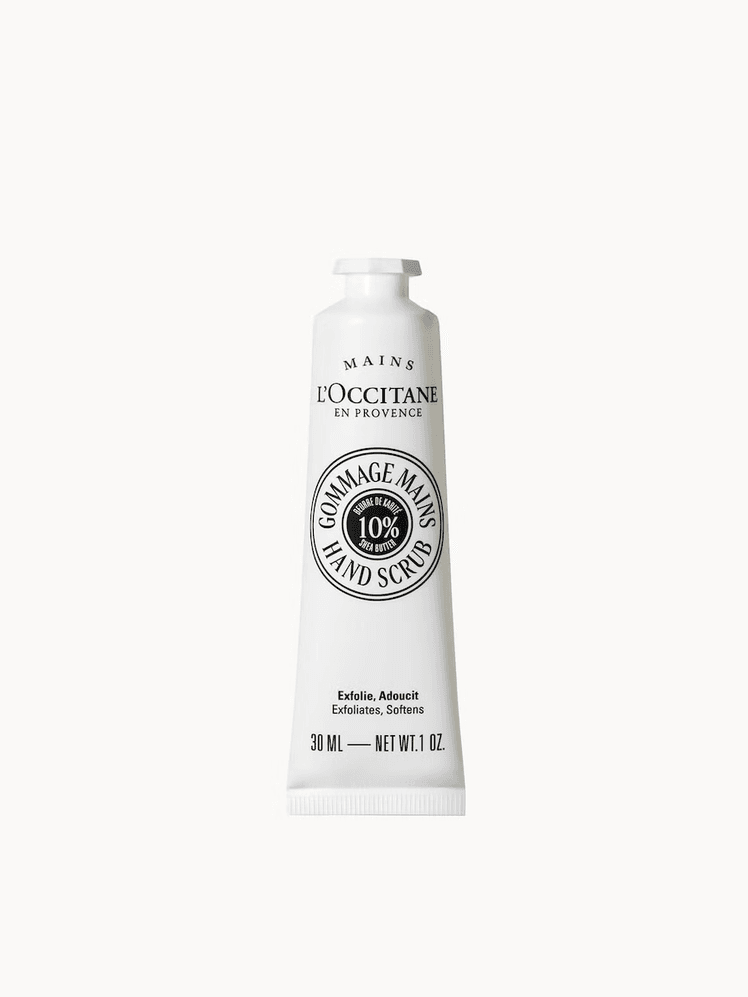
Once your nails are fully dry, exfoliate hands, wrists, and forearms with a scrub that eliminates dead skin cells and replenishes moisture. You may want to do this in a separate session to ensure your nails are as dry as can be. Grab your orange stick again to gently clean any grime from under nails. Wash hands afterward and dry them thoroughly.
Finally, moisturise. Take the opportunity to give yourself a mini hand massage – just because you're not at a spa doesn't mean you can't relax for a minute.
Neom Wellbeing Calming Hand Balm