
If you’ve been sitting in my chair for more than a few years, you already know I have a complicated relationship with the side part. Not because I don’t love it, I genuinely do, but because somewhere around 2019 everyone decided it was “over” and I spent a solid two years talking clients out of the middle parts they didn’t actually want. One woman came in with a screenshot of some influencer and I just looked at her and said, honey, your cowlick is never going to let that happen. We did a side part. She cried happy tears. I’m not exaggerating.
The thing about a shoulder-length side part is that it’s one of those cuts that works hardest when you stop fighting your hair’s natural tendencies and start using them. Your part should follow your growth pattern, not a ruler. Your layers should sit where your hair already wants to move. When I get that right on someone, the cut practically styles itself by day three, and that’s really what we’re all after, isn’t it, a haircut that looks better on a Thursday than it did on a Monday.
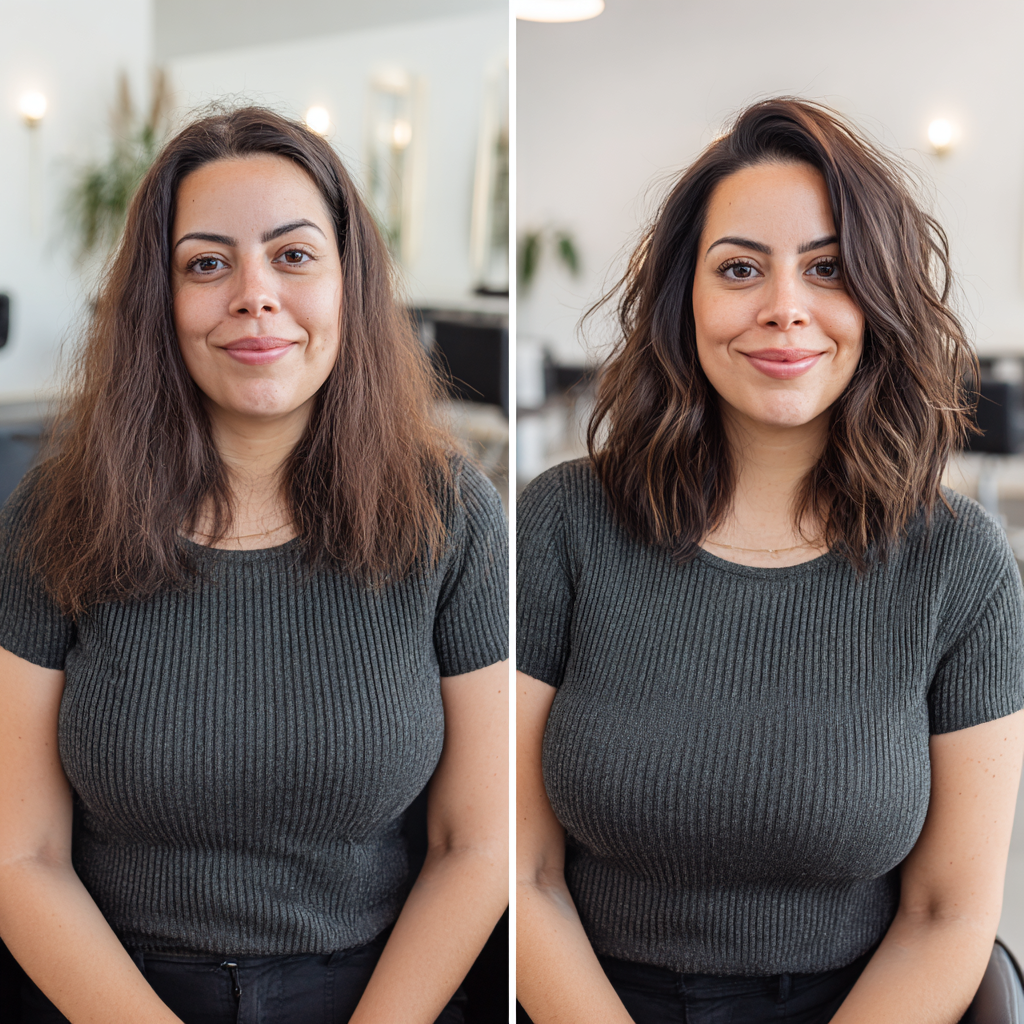

This is the cut I’d do on a Saturday morning client who wants to be out of the salon by noon and still look like she put some thought into herself. The waves here aren’t styled so much as coaxed, and that’s a distinction I find myself making a lot lately because over-styled waves have this stiff, pageant quality that nobody actually wants up close. What makes this work is the point-cutting through the ends, which keeps the perimeter from looking blunt while still giving the wave something to grip. If your hair is medium density and has even a slight natural wave, this is going to be easier to maintain than you think.

Defined curls at shoulder length are genuinely one of my favorite things to cut because you’re working with the hair’s architecture rather than against it, and when it’s done well there’s this moment when the client shakes her head and the curls just… settle. That’s the moment I love. The trick here is leaving enough weight through the sides that the curls don’t spring up too short once they dry, because shoulder length when wet can become chin length by the time you walk to your car if we’re not careful. I’d add a couple of face-framing pieces that are cut a little softer than the rest, just to keep it from feeling too uniform.

I want to talk about the nape graduation in this one because most people look at a photo like this and think “soft lob, pretty waves, moving on,” but the reason the ends have that gentle flip rather than just hanging there is interior graduation work that most stylists don’t bother with. It’s fiddly, it takes longer, and the client can’t always see it in the mirror, but she feels it every morning when her hair dries into shape without much help from her. The feathered ends here are slide-cut, not point-cut, and that matters because slide cutting on fine-to-medium hair removes bulk without removing density, which is the whole thing you’re trying to protect.
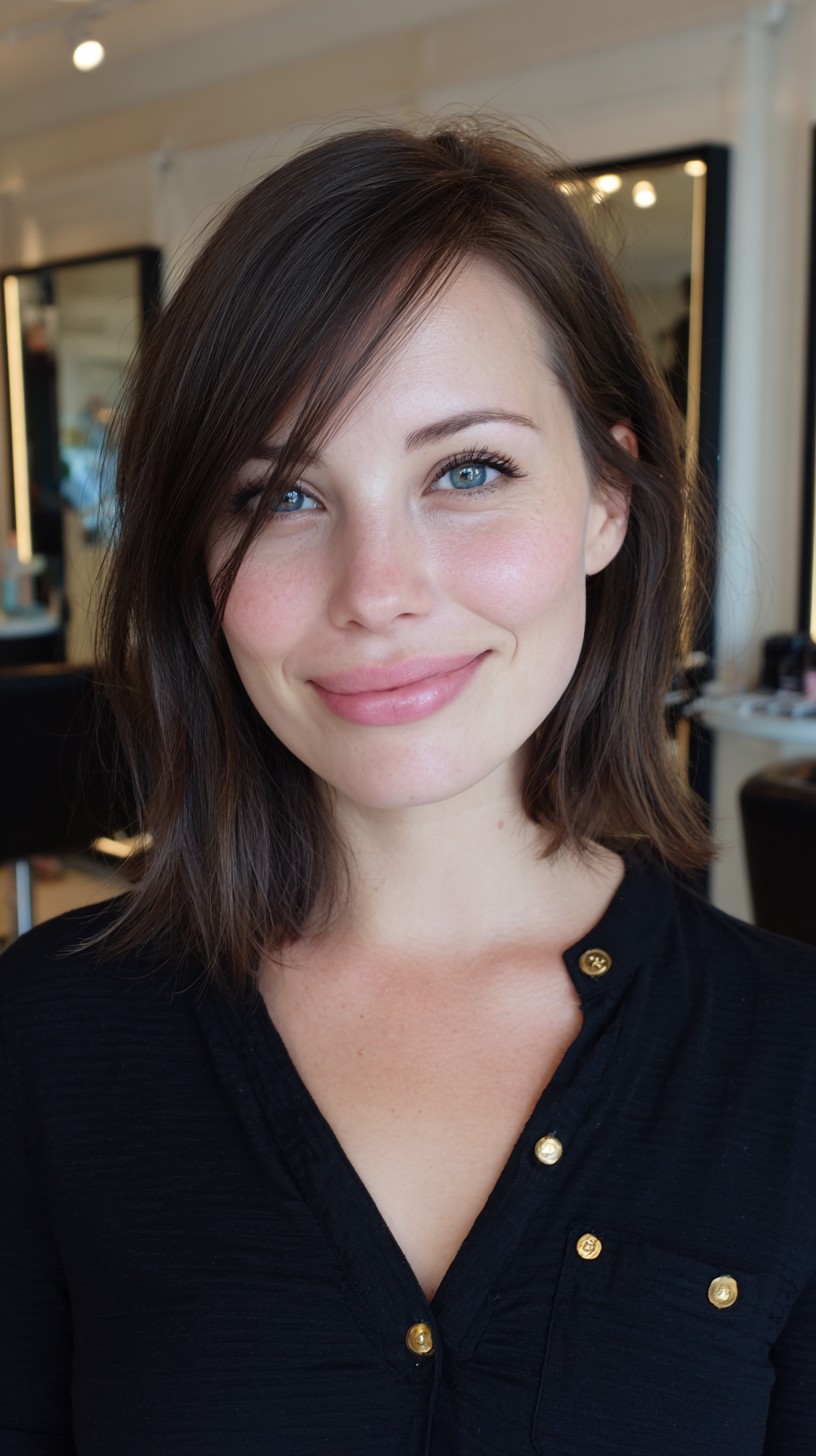
The ash brown here is doing something really specific that I appreciate, which is that it’s not fighting the skin tone, it’s just sitting quietly and letting the cut do the talking. The diagonal fringe is the kind of thing clients ask for about once a month and then immediately say never mind when I get the scissors near their face, but this version is long enough that it’s not a commitment so much as a lean in a direction. Collarbone length, slight inward curve at the ends, and that fringe swept across, it reads very polished without trying to be. Daily styling on the fringe, yes, but the rest of the hair is pretty forgiving.
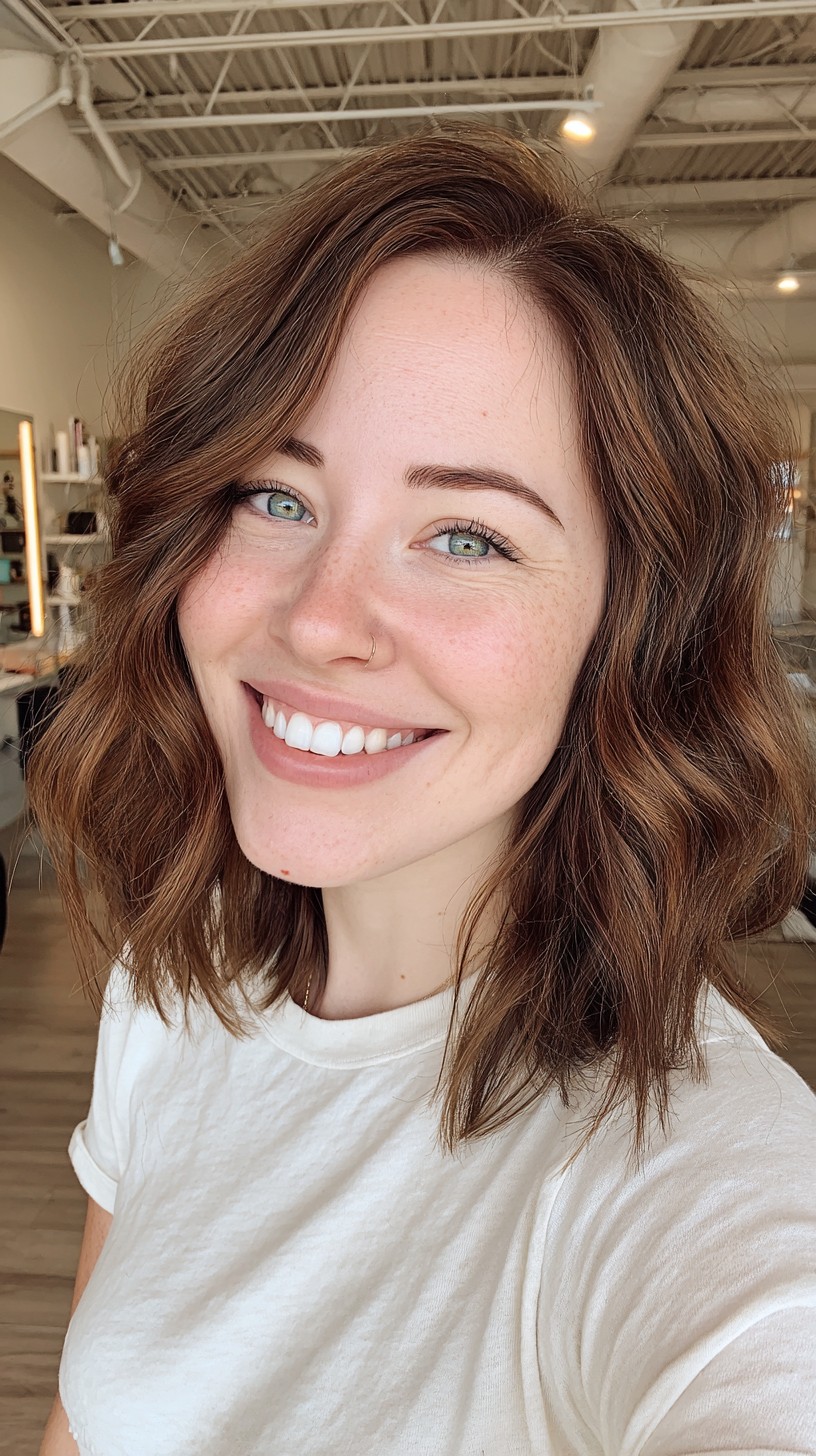
There’s a cowlick at the front here that I can tell the stylist left alone and honestly, good, because fighting a front cowlick on a deep side part is a losing battle and the hair always wins by Wednesday. What they did instead was build the cut around it, letting it create that natural lift at the crown that you’d otherwise have to blow-dry into submission every single morning. The root shadow in the color is doing the same kind of work, making the grow-out feel intentional rather than neglected. I’d use a light texturizing spray on the mid-lengths here and call it done.
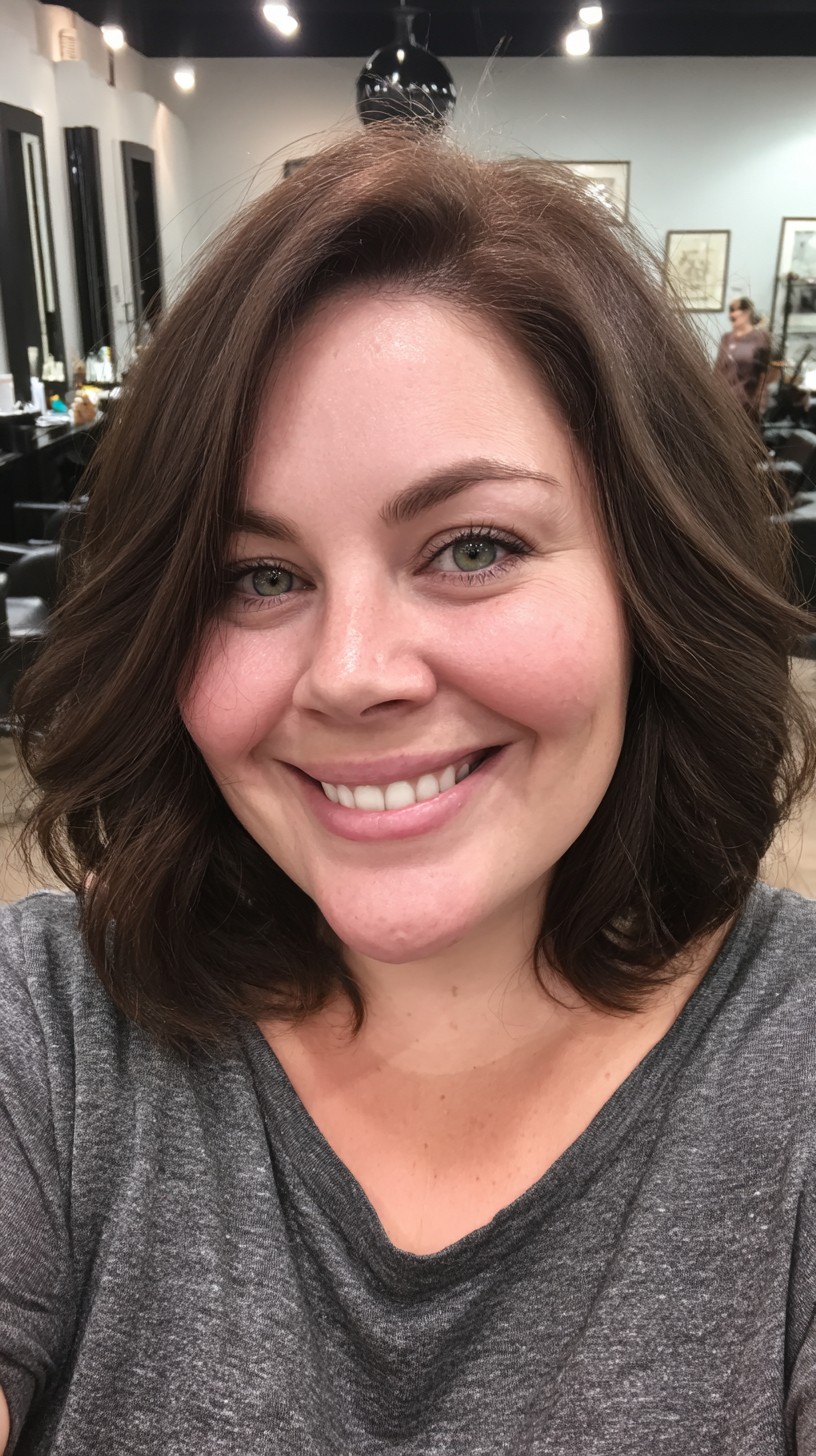
Okay, the color first, because this chocolate brown with a root shadow is exactly what I try to talk clients into when they come in wanting to go full dark. The shadow keeps it dimensional and makes the grow-out graceful instead of obvious, and that matters more than people realize when they’re sitting in my chair at ten weeks going, do I need to come in? Sometimes the answer is no and that’s a gift to everyone. The cut itself has a nape graduation that creates the inward curl without you needing to use a round brush every single time, which on fine-to-medium straight-ish hair is a small miracle. Point-cut ends throughout.

When a client says easy, she usually means she wants to air dry and not feel bad about it, and this cut is genuinely built for that. The warm chestnut reads differently depending on the light and that saves it from feeling flat, which is the risk you run with an all-over color at this depth. The waves here aren’t structured, they’re just what happens when fine-to-medium hair dries with a little product and some movement, and the side part keeps the whole thing from going shapeless. The color will need maintenance but the cut itself? She can go longer between trims than she thinks.
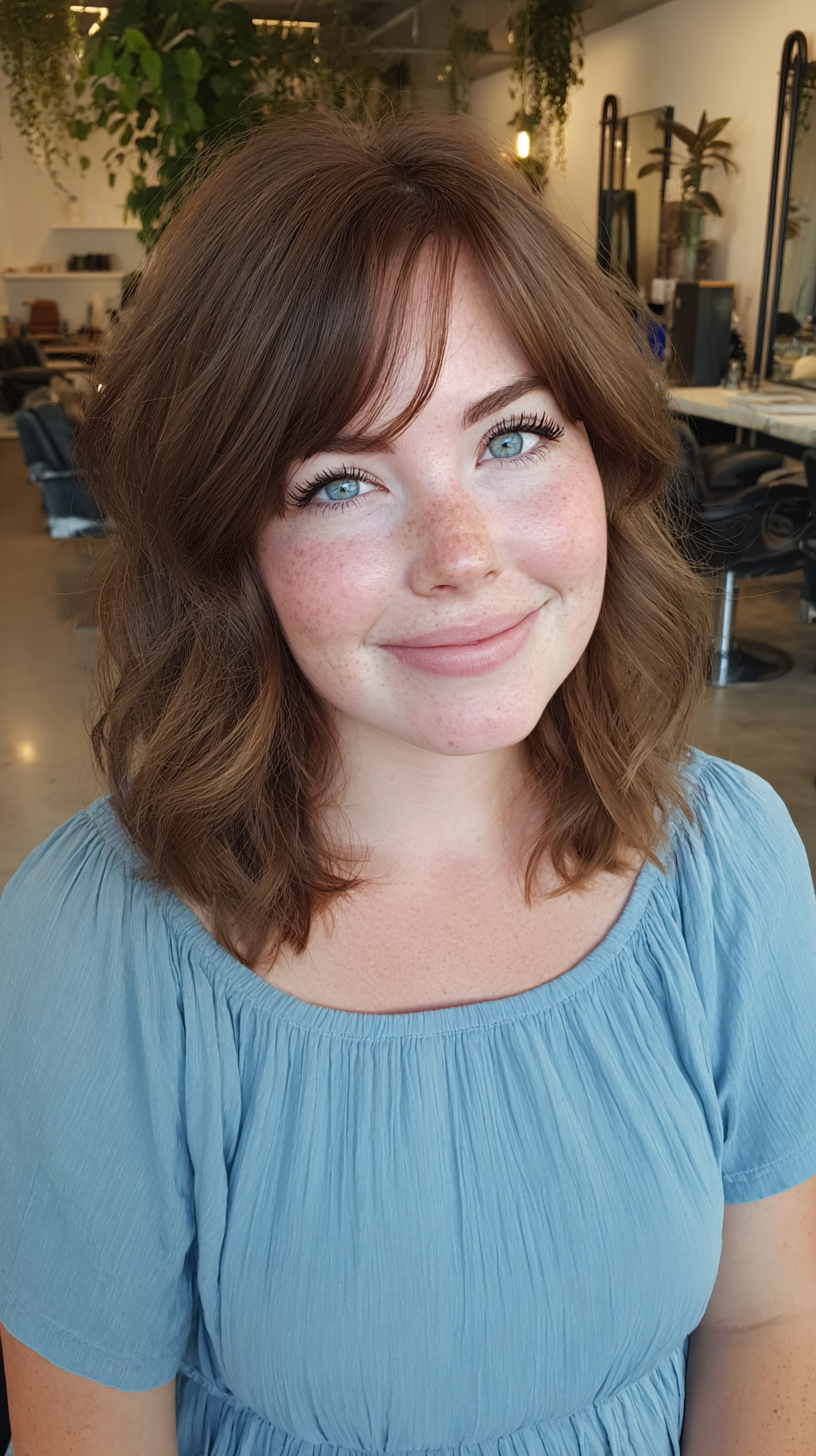
Fine hair with a side part and soft layers is a combination I could do in my sleep, and I mean that as a compliment to the cut and a gentle warning to myself not to get complacent with it. The balayage here is the thing that keeps it from looking generic, because without some color movement a layered lob on fine hair can start to feel a little blank. The placement is smart, lighter through the mid-lengths and ends, which adds the illusion of thickness at the perimeter and that’s exactly where you want it. The layers are long and blended, nothing that’s going to create bulk or a triangle shape if the client doesn’t style perfectly every day.
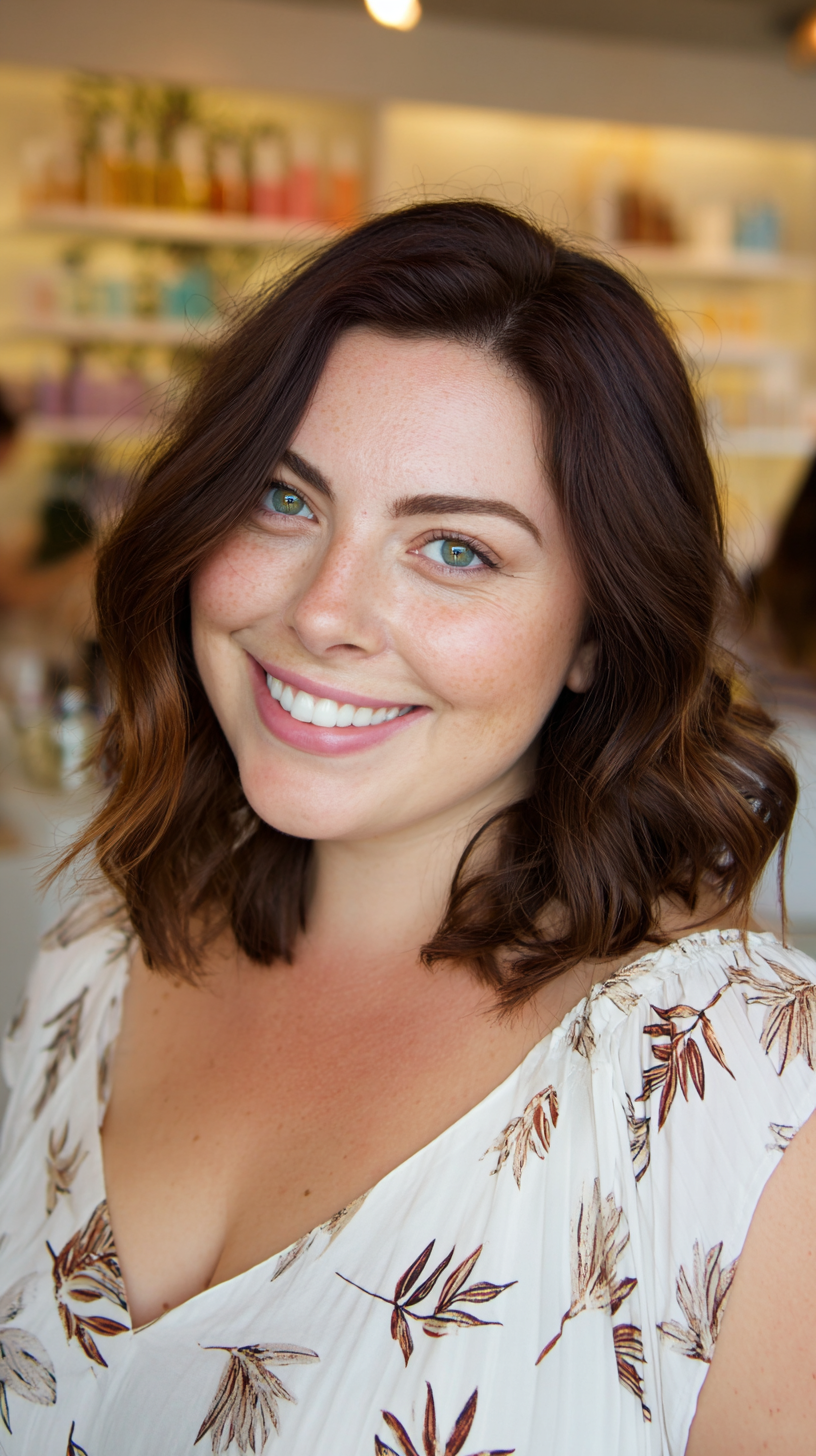
Medium to thick hair has this quality in certain light where it looks almost luminous, especially when there’s a little wave and a side part pulling everything in one direction, and that’s what’s happening here. I don’t have a technical explanation for why it photographs the way it does, it just does, and some cuts are like that. The side part is flattering the face shape without trying to, which is the best kind of flattering. I wouldn’t change much about this except maybe a tiny bit of softening at the ends to keep it from feeling too polished, because the slight undone quality is actually what makes it work.
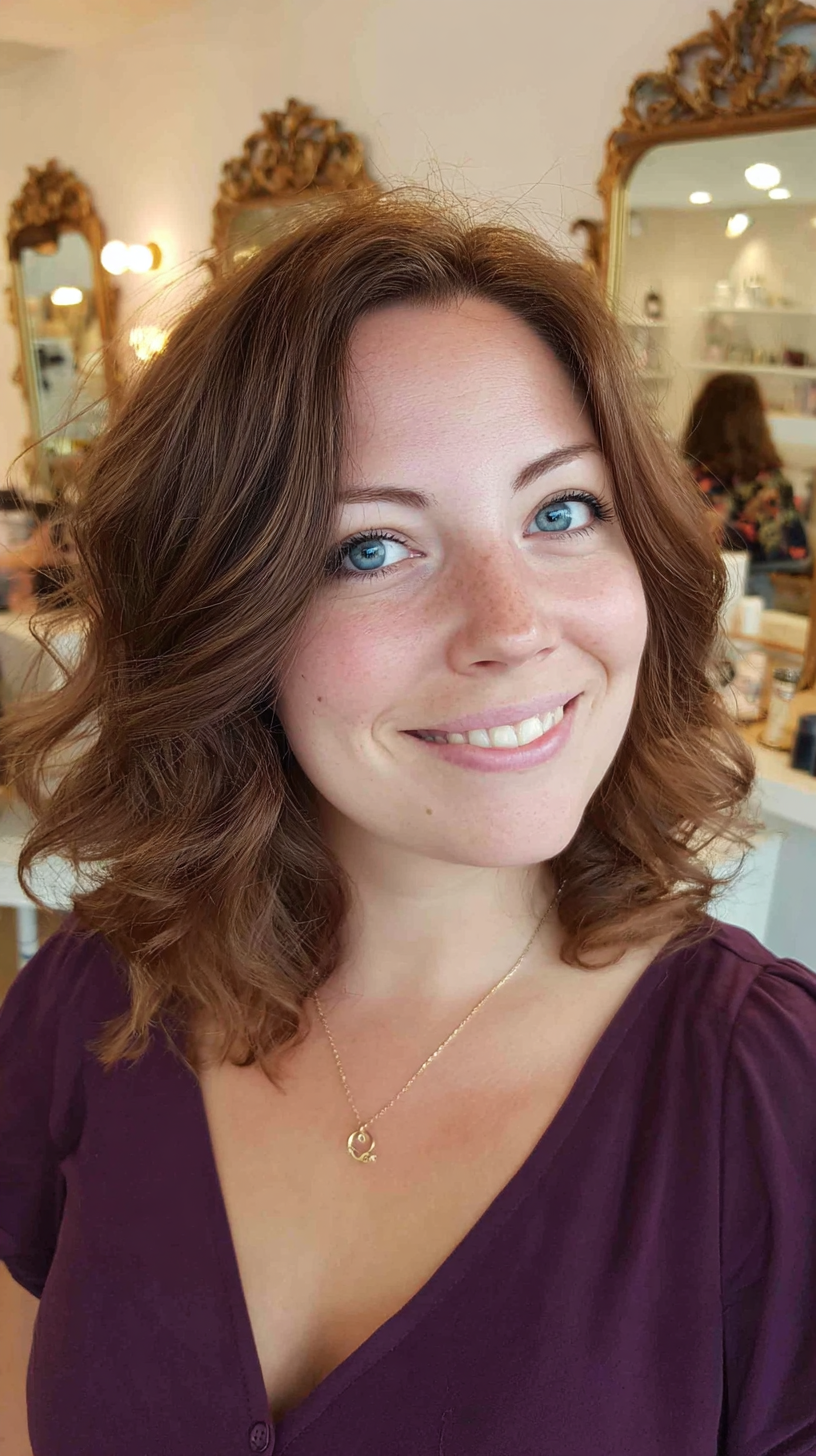
This is the kind of color I get genuinely excited about, a rich chestnut that hits differently on fair to medium skin tones because it’s warm without going orange, which is a narrower target than it sounds and a lot of stylists miss it. The curls here are defined without being crunchy and I know that sounds like a low bar but it genuinely isn’t, because getting curl definition without that stiff cast requires either the right product, the right technique, or both. The side part on curly hair is something I always do last, once the hair is styled and dry, because parting curls wet locks in a decision the hair may not want to keep.
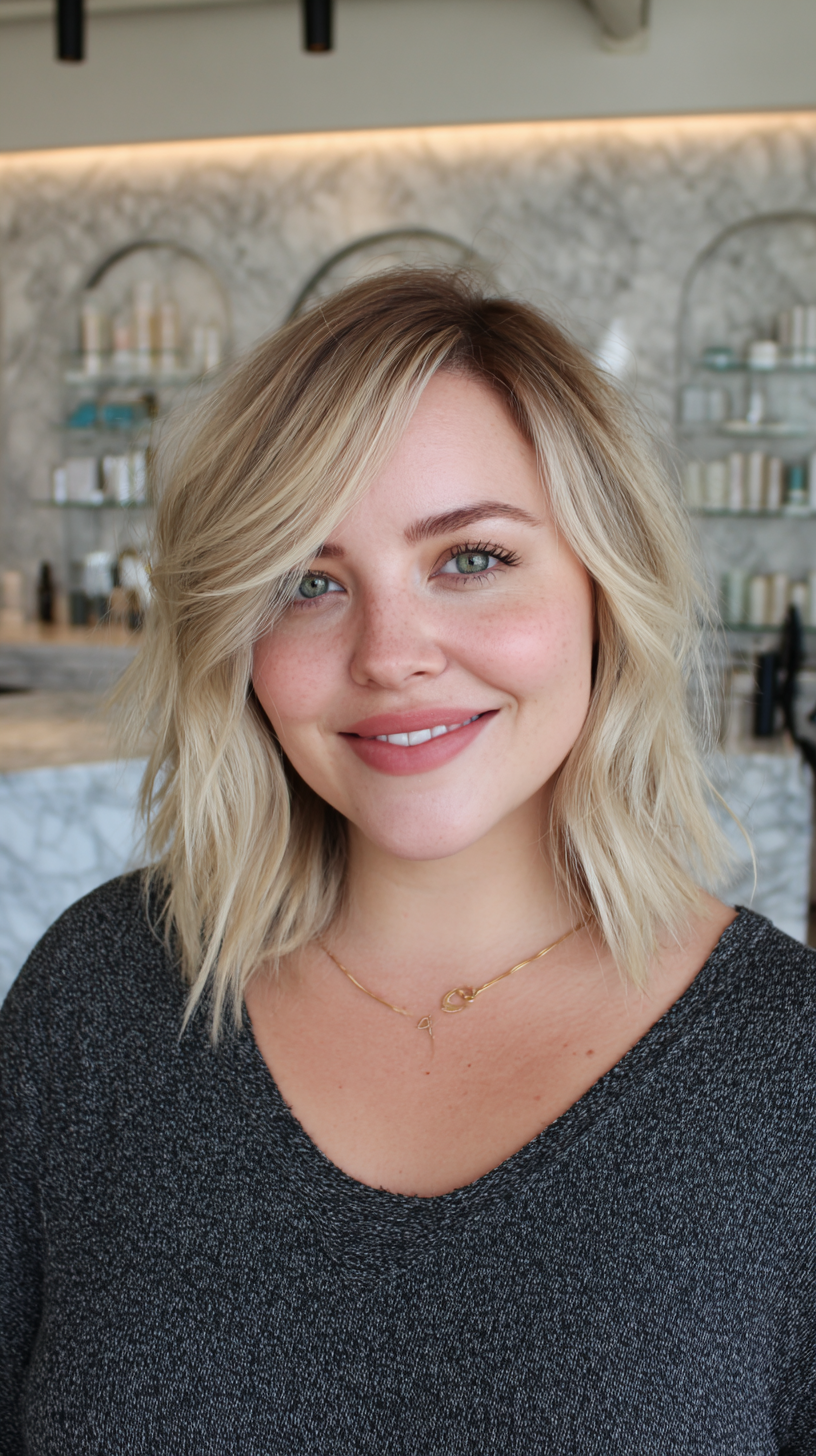
I say this constantly and I’ll say it again, the goal with highlights should always be that someone notices your hair looks good before they notice you have highlights, and this is a perfect example of that done right. They’re soft, they’re placed to add dimension rather than drama, and on fine-to-medium hair this kind of color actually makes the hair look thicker because of how light plays through the layers. The texture here is minimal, just enough point-cutting to keep the ends from looking blunt, and the side part is doing all the heavy lifting on framing. This is a cut that’s comfortable with itself and I find that more appealing than I can fully articulate.
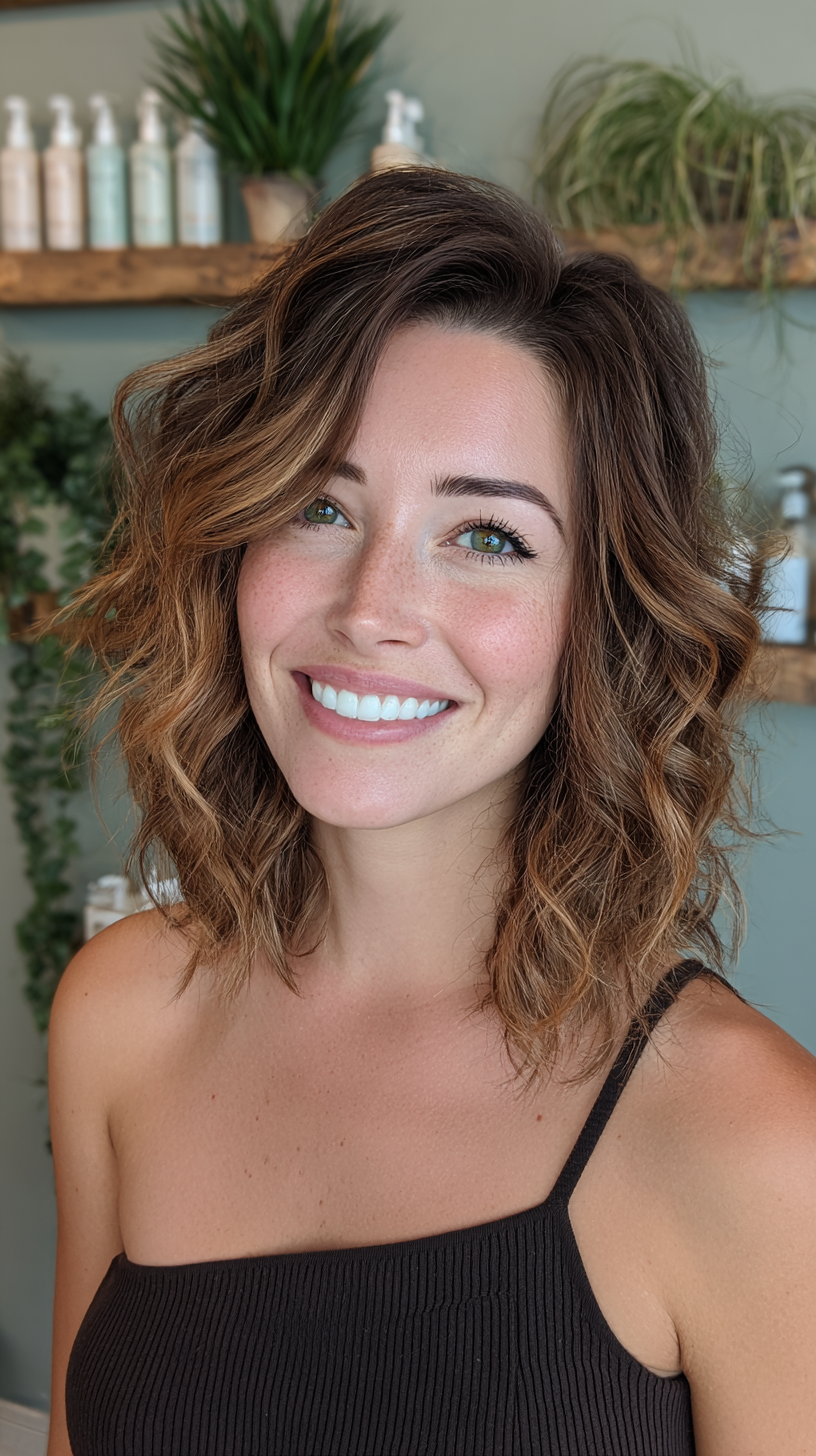
There’s a version of this cut that I’ve done probably three hundred times and it always surprises me a little when it comes together, because the strategic part, the layers placed specifically to add volume around the face while keeping the silhouette balanced, is invisible in the finished result. That’s the point. The natural wave is enhanced rather than fought, the highlights are subtle, and the whole thing has a bounce to it that fine-to-medium hair doesn’t always get to have. A light touch with the styling, maybe a curl cream through the mid-lengths, and this basically takes care of itself.
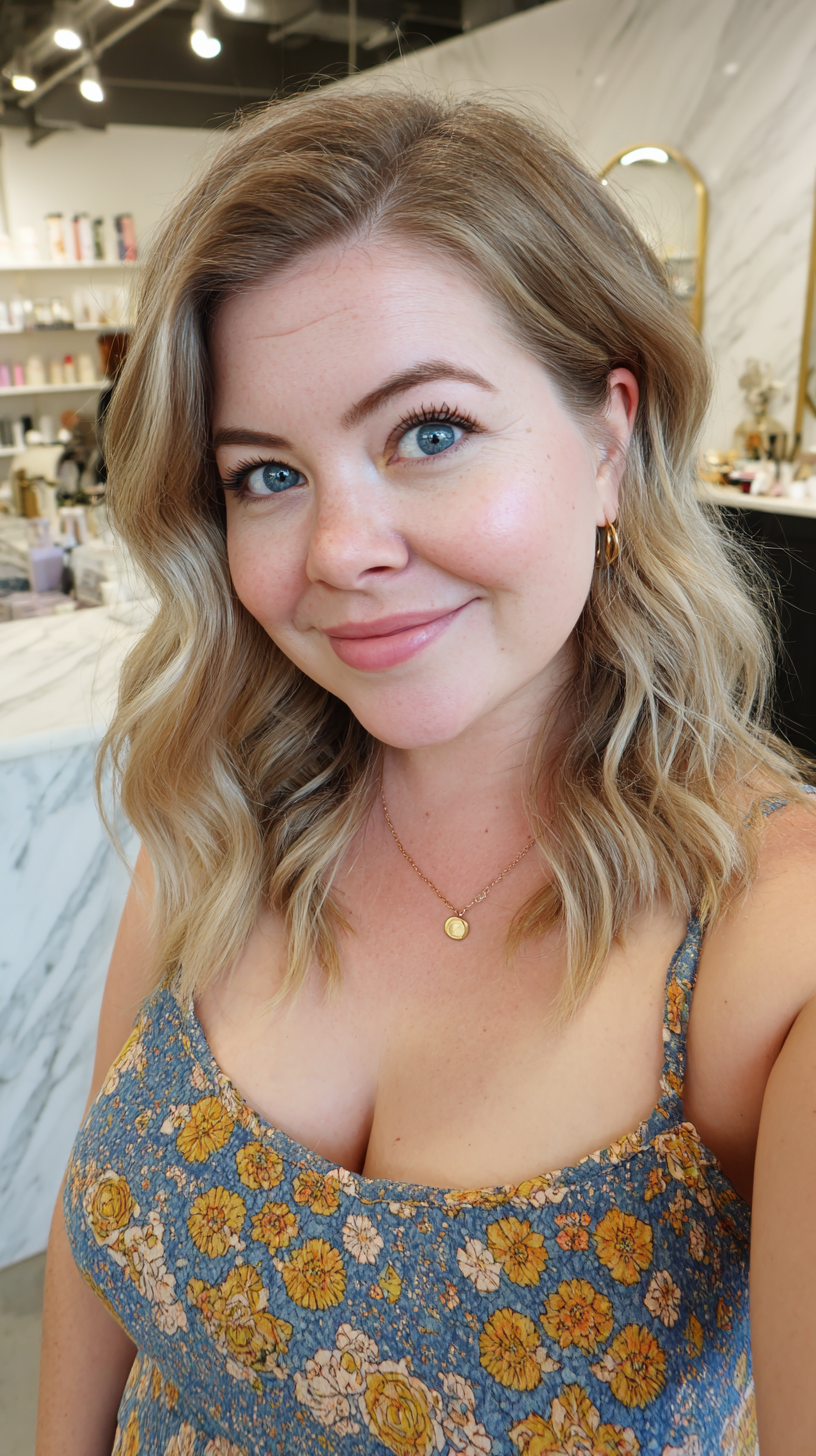
Balayage on this texture is really doing something because the color variation catches in the waves and makes them look more dimensional than they’d be with a flat all-over color, and that’s worth paying for even if it means sitting in my chair a little longer. The waves themselves are the kind of thing that looks casual but requires just enough effort to feel intentional, which is a nice place to be on the low-maintenance spectrum. On fine hair this comes together pretty naturally with a salt spray and a diffuser. On thick hair you’re going to need some time and a 1.25-inch iron but the result will hold longer, so it evens out.
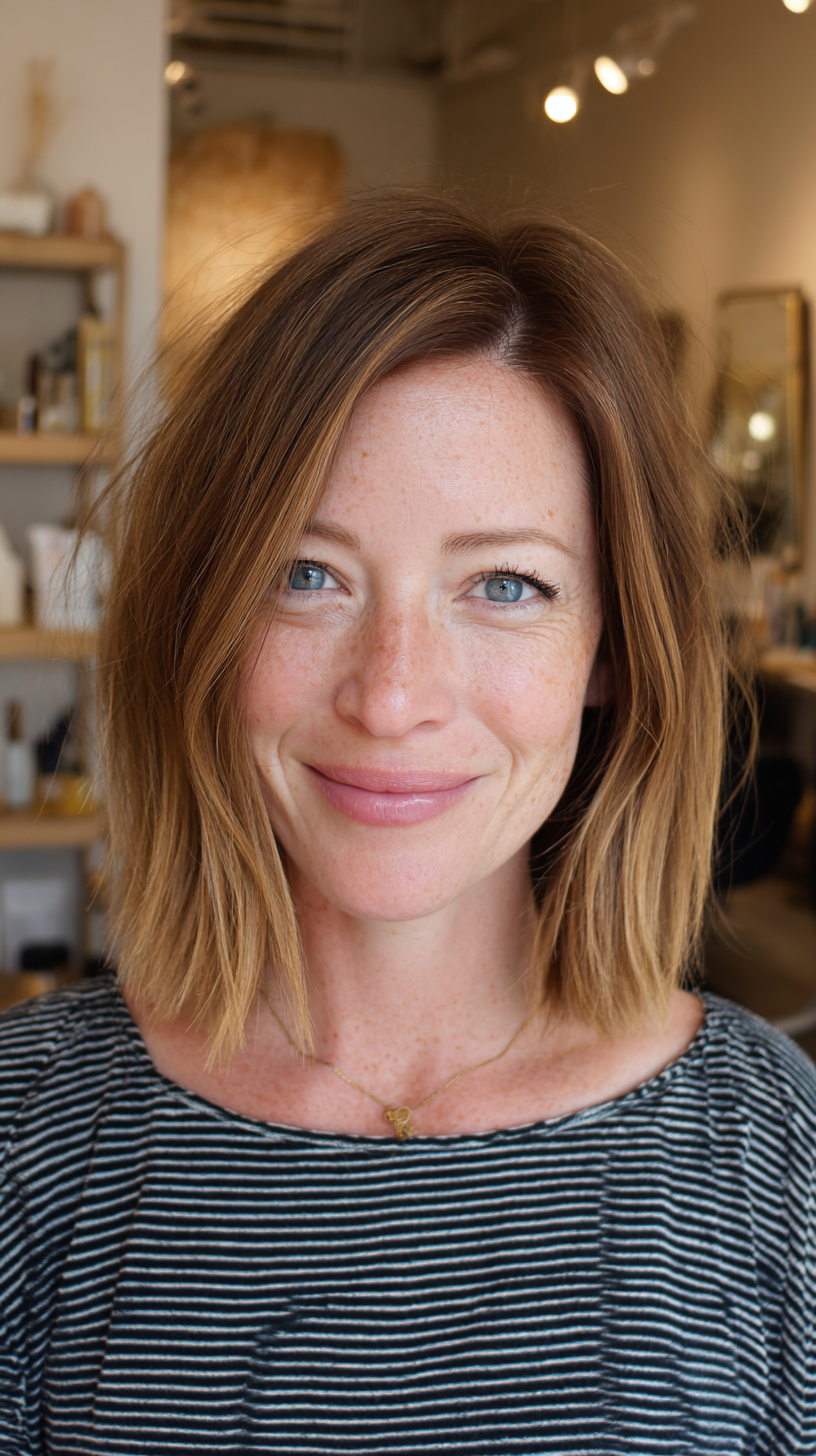
The color here is one of those warm light browns that sits very quietly and looks expensive without screaming about it, and on fine-to-medium hair the natural highlights add exactly the kind of warmth that makes you look healthier rather than more highlighted. The cut is soft, the layers are subtle, the side part is gentle rather than deep, and all of it together feels like a very considered version of a classic. This is the cut I’d suggest to a client who’s been doing something more dramatic and wants to come back to something that just works. Regular trims matter here, about every eight weeks, because the layers are what make this look intentional and they soften quickly.
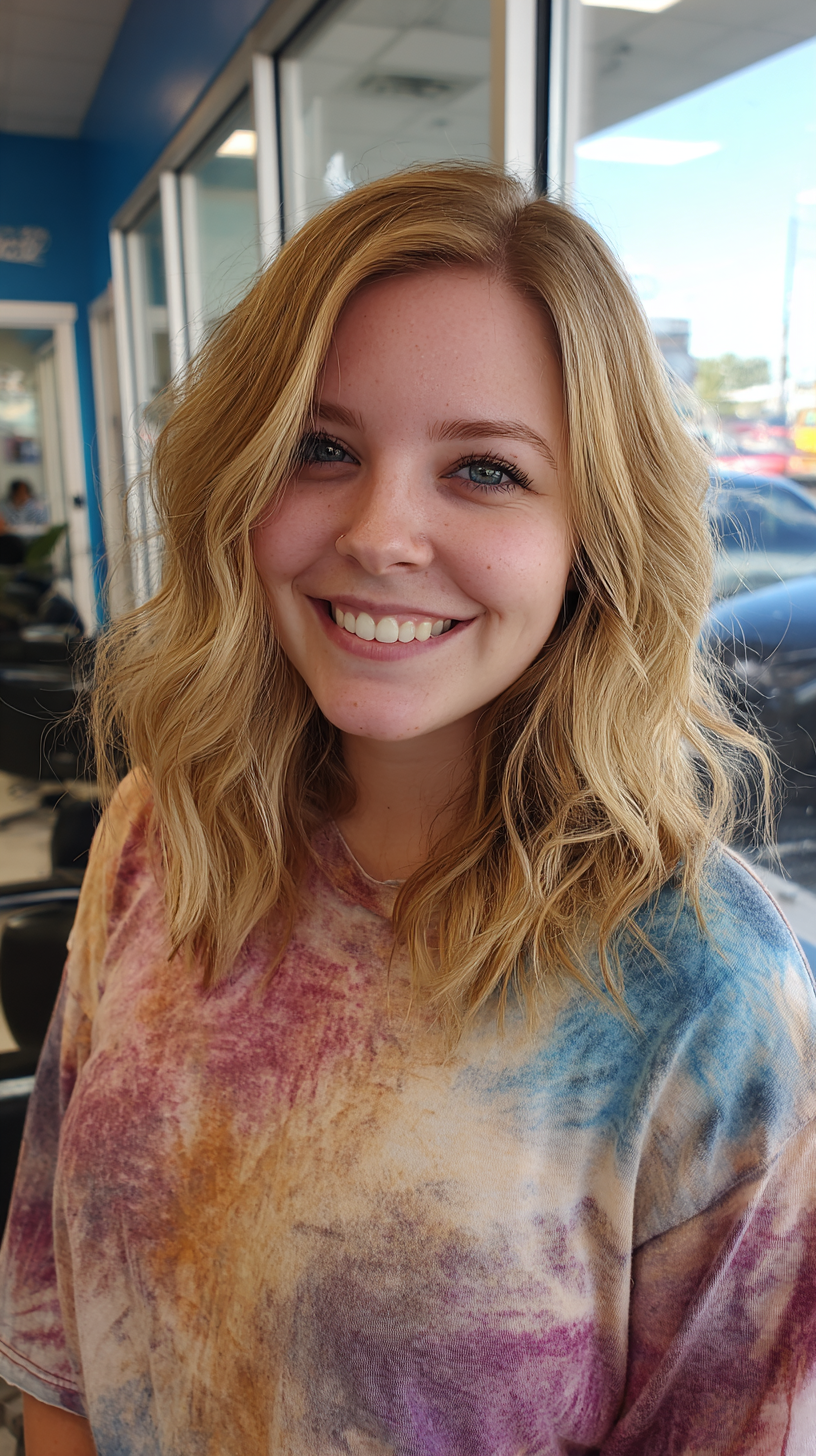
The difference between beachy waves that come from a good cut and beachy waves that come from a lot of product is something you can feel by day two, and this is the former. The texture is built into the ends through the cutting technique, which means the wave has something to grip rather than just being coaxed into shape with sea salt spray and hope. Medium density hair takes this kind of cut really well because there’s enough weight to hold the wave but not so much that it drags it straight. If you’re considering adding subtle highlights to something like this, I’d go warm rather than cool so the whole thing reads cohesive.
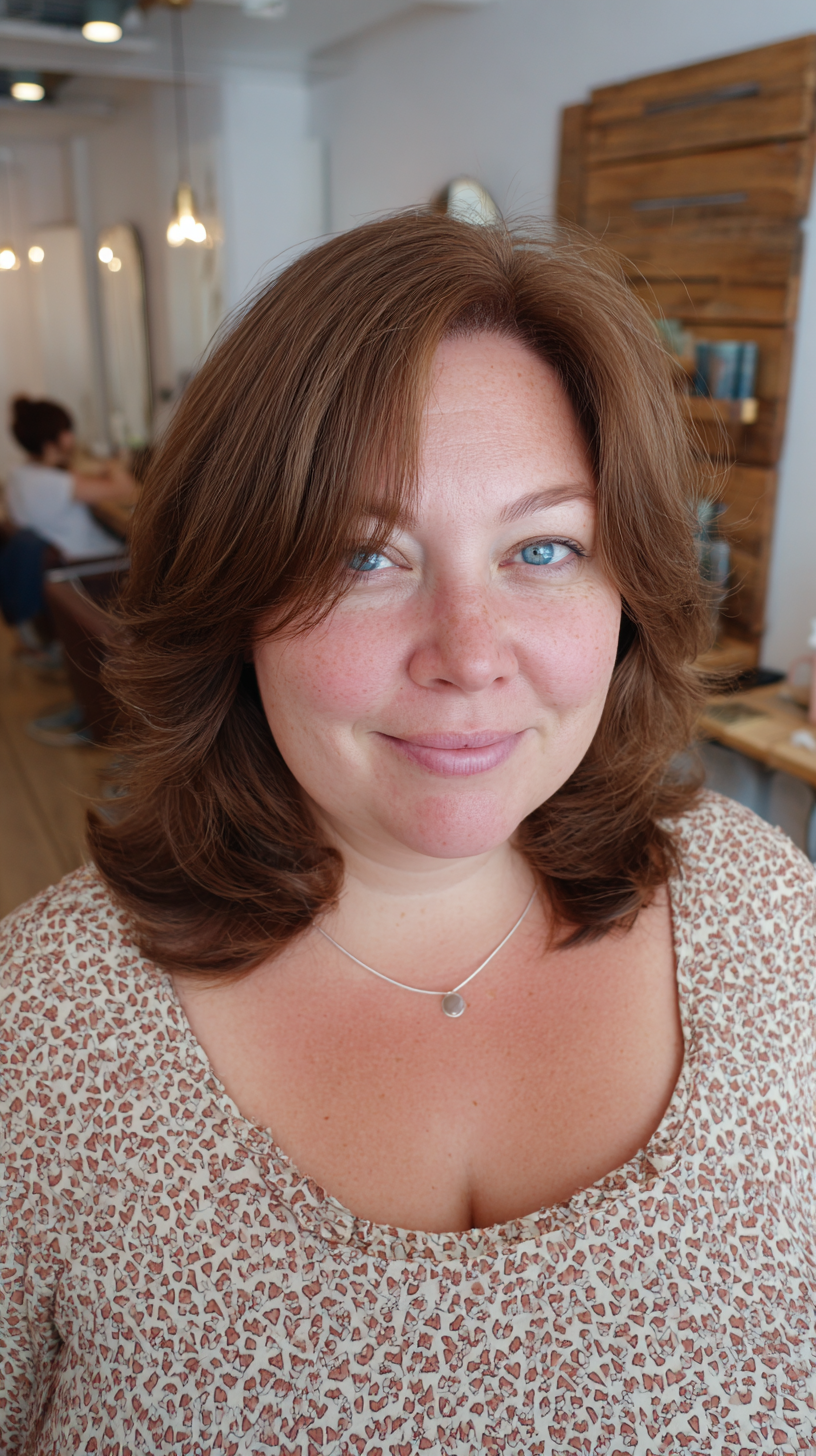
Crown volume without teasing is something I talk about more than almost anything else in consultations because so many clients are either teasing way too much or they have absolutely no lift and they’ve accepted it as their fate, and neither needs to be true. The layers in this cut are placed to encourage natural lift at the top rather than just adding texture through the mid-lengths, which is the more obvious choice and also the less effective one. The warm brown color reflects light upward, which helps, and the side part keeps the crown from going flat where a center part would divide and collapse it. This is medium-density hair working at its best.
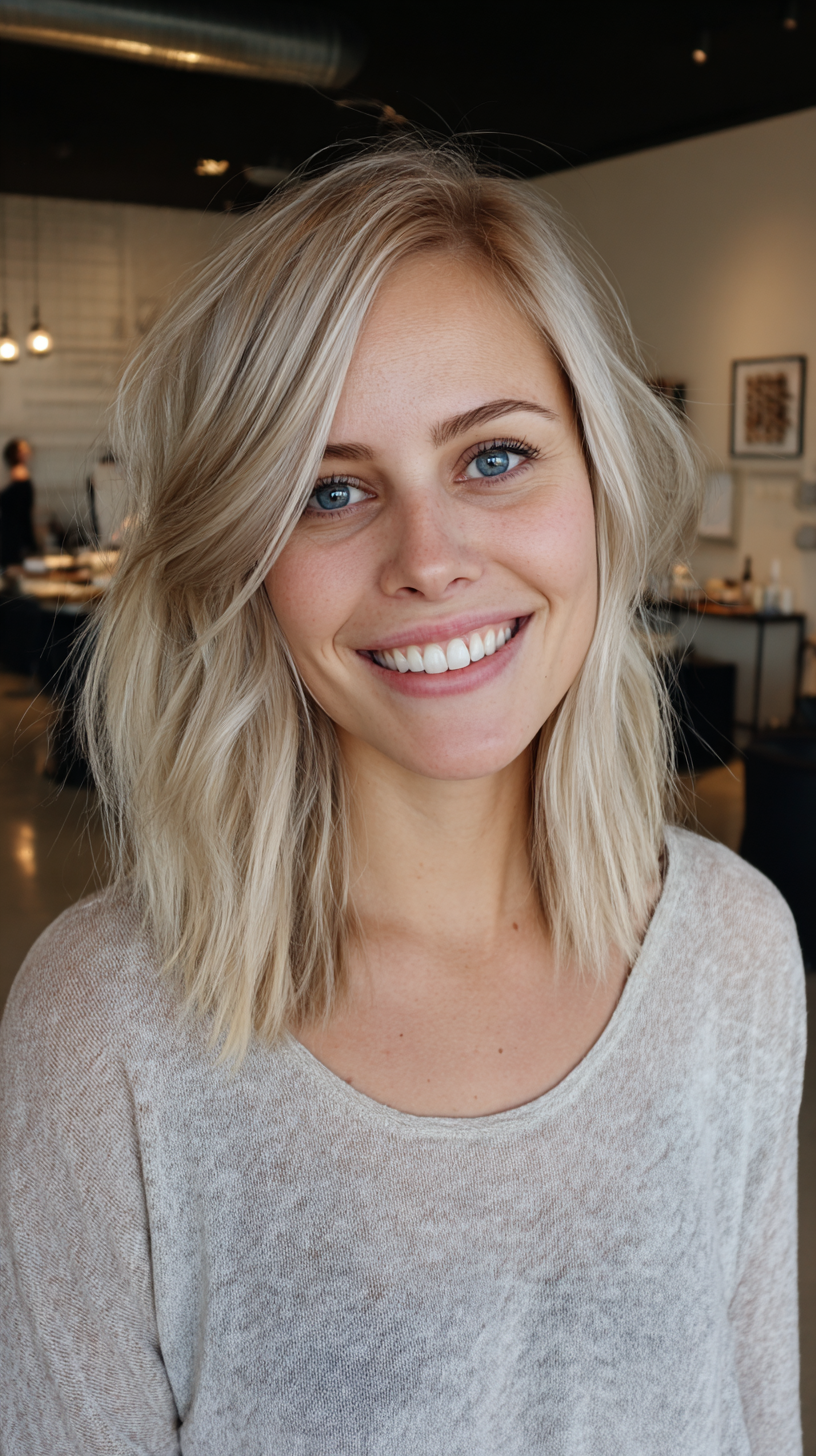
Blonde at shoulder length is tricky because lightening fine hair removes some of the natural texture that holds a wave, so you have to build more into the cut to compensate, and this is a good example of that done thoughtfully. The layers add movement without sacrificing the density you need at the perimeter for the style to hold its shape. The side part is keeping everything from going too casual, which light blonde can do quickly when there’s no structure to anchor it. I’d use a volumizing mousse on this at the root before blow-drying, not for lift exactly, but for longevity, because fine blonde hair needs all the staying power it can get.

Fine-to-medium hair can look like a lot of hair when the cut is right, and the cut here is right, with just enough texture through the ends to add bounce without removing the fullness that makes fine hair look rich rather than thin. The waves are soft and a little irregular, which I always prefer to perfectly uniform waves because irregular means the hair is doing something natural and natural wears better through the week. A little styling product for definition, nothing heavy, and this is genuinely easy to live with. The side part is understated enough that it doesn’t date the look.
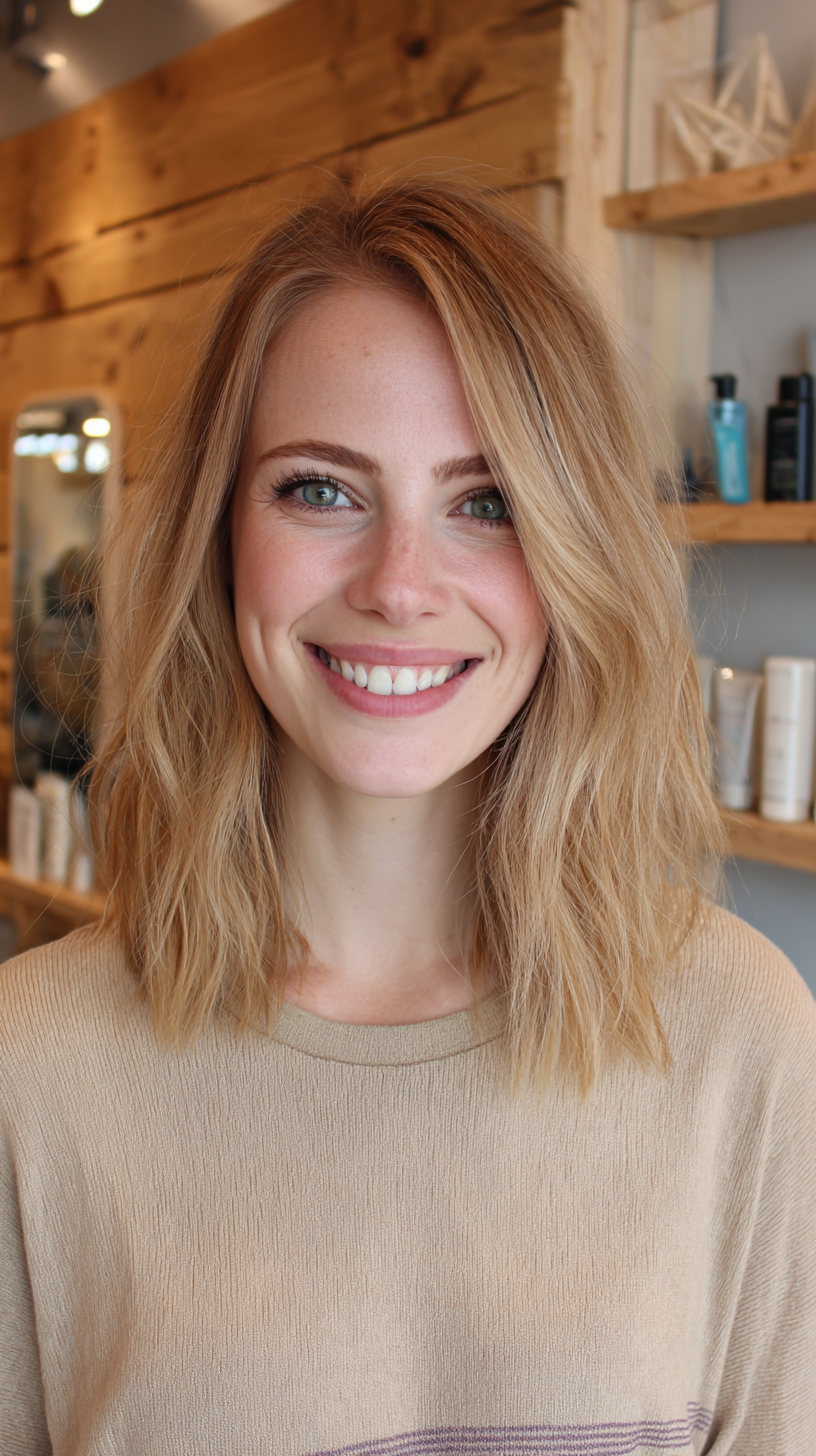
There’s a version of layering that goes too far and suddenly the client has a lot of movement but no weight and the cut doesn’t sit properly after a wash, and this is the version where they stopped before that happened. The subtle layering here adds movement without creating the feathered, slightly-dated feeling that over-layered shoulder-length hair gets. Fine hair especially needs that restraint because once you remove too much density from the perimeter you can’t put it back until it grows. The waves are relaxed, the side part is flattering, and the whole thing has a balance to it that I find quietly impressive.
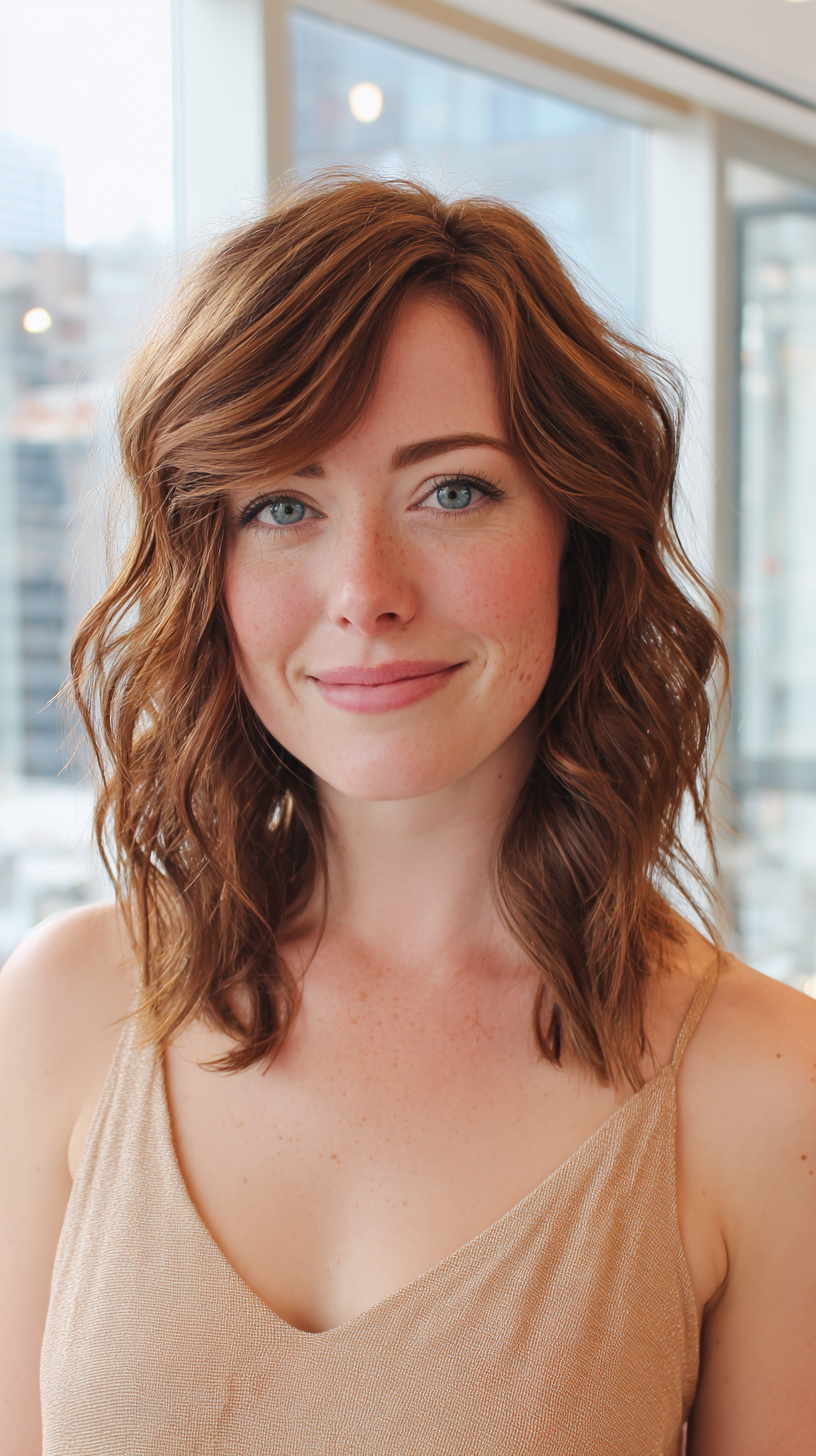
Medium to thick hair is so satisfying to cut for shoulder-length styles because there’s enough material to really do something with the texture, and the tousled quality here comes from how the ends are cut rather than just how they’re styled, which means it survives a second-day wash and still has personality. The side part on this thickness of hair is doing real structural work, creating movement and asymmetry that keeps the whole thing from feeling heavy. The playful quality isn’t accidental and it’s not just beach spray either, it’s a cut that was thought through.

I want to be honest with you, when a client comes in and says she wants subtle highlights, what she usually means and what she ends up asking for are two different things, and this photo is the version where we stuck with the original plan and it was absolutely the right call. The highlights here are soft enough that they read as natural movement in the hair and not as highlights at all, and on this texture they enhance the waves beautifully. The cut is layered through the interior to add volume without bulk, the ends are textured, and the side part pulls it together into something that looks very deliberate without feeling overdone.

This is the cut I point to when someone says she wants to look put-together but doesn’t want to spend forty-five minutes on it, because the warm brown color and the polished finish read as effort even when the styling is pretty minimal. The layers are long and subtle, the kind that add movement to fine-to-medium hair without requiring you to do anything specific to activate them. The side part brings a touch of elegance that a center part just wouldn’t give this particular cut, and the smooth finish is achieved with a round brush and a medium-hold cream rather than anything heavy. Regular trims to keep the layers reading fresh, yes, but otherwise this is a surprisingly easy style to maintain.
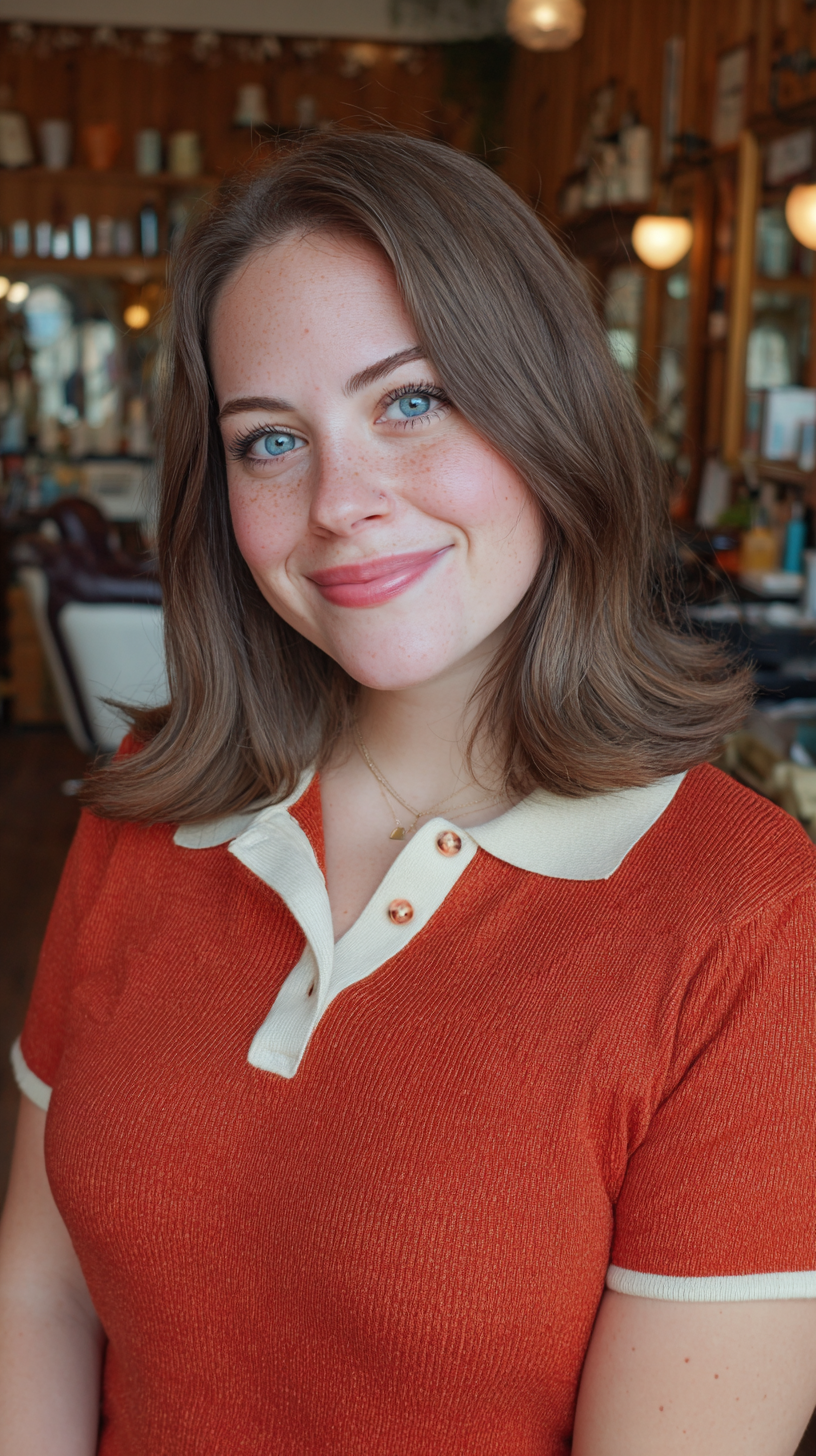
Straight hair with medium density is sometimes overlooked in favor of more textured or wavy styles but this cut is a reminder that when the layers are right and the part is right and the length is right, straight hair is quietly stunning. The soft layers here are long enough that they don’t create bulk at the cheekbones, which is the mistake I see most often, and the side part frames the face in a way that feels natural rather than constructed. It can be dressed up easily or worn casually, and on a weekday morning this probably takes ten minutes to style, which is worth more than most people admit when they’re sitting in my chair dreaming about something complicated.
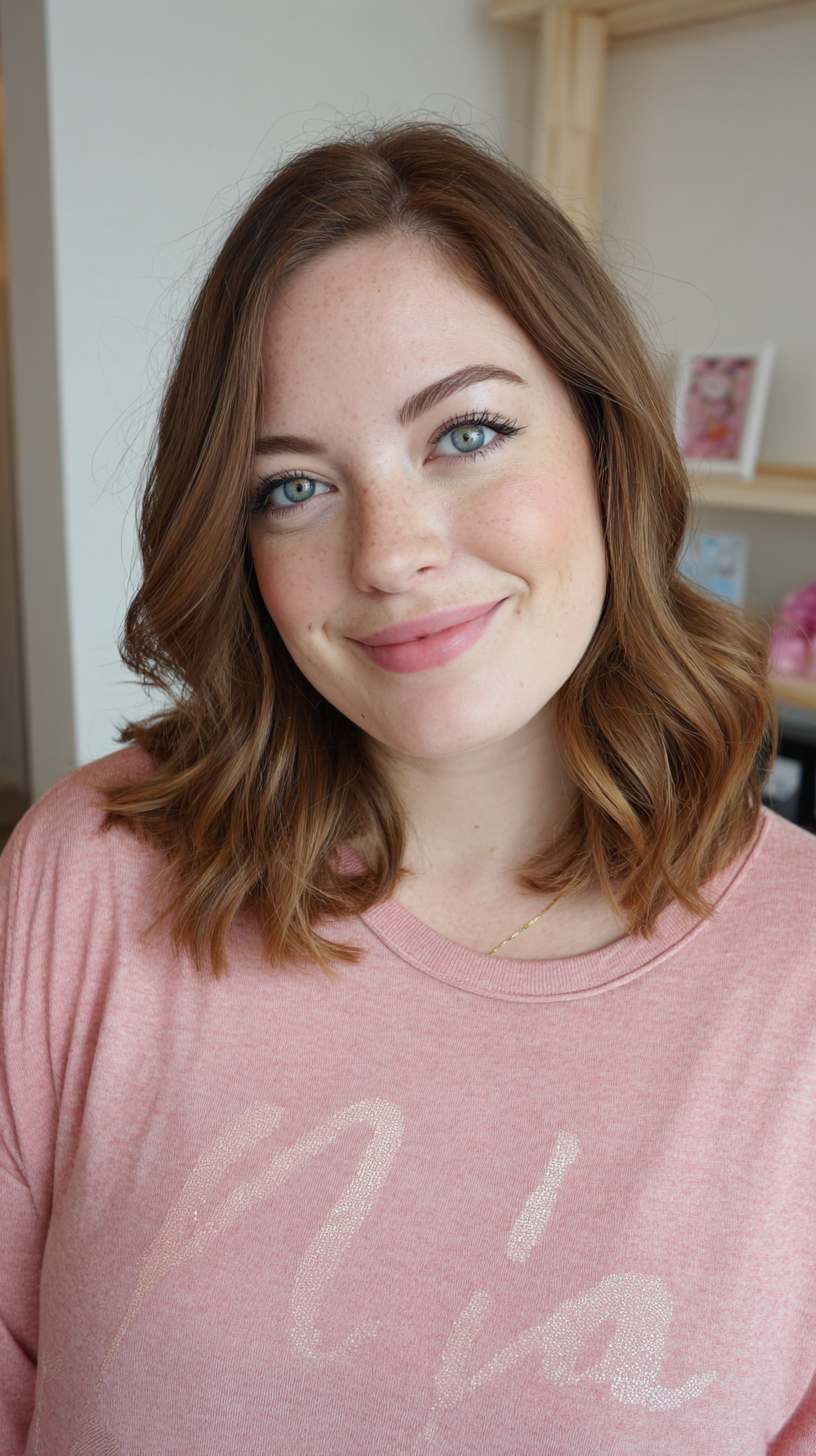
Fine curly hair at shoulder length is one of those combinations where the cut has to do a lot of work to prevent the hair from going triangular at the bottom, and the way this is cut, with the weight removed through the interior rather than the perimeter, keeps the shape from going wide at the ends. The loose waves here have a softness to them that you get when the cut supports the curl rather than fighting it. The side part is a considered choice on this type of hair, it shifts the weight asymmetrically and prevents that flat-top thing that can happen with fine curls when there’s too much density at the crown. Charming without being fussy.
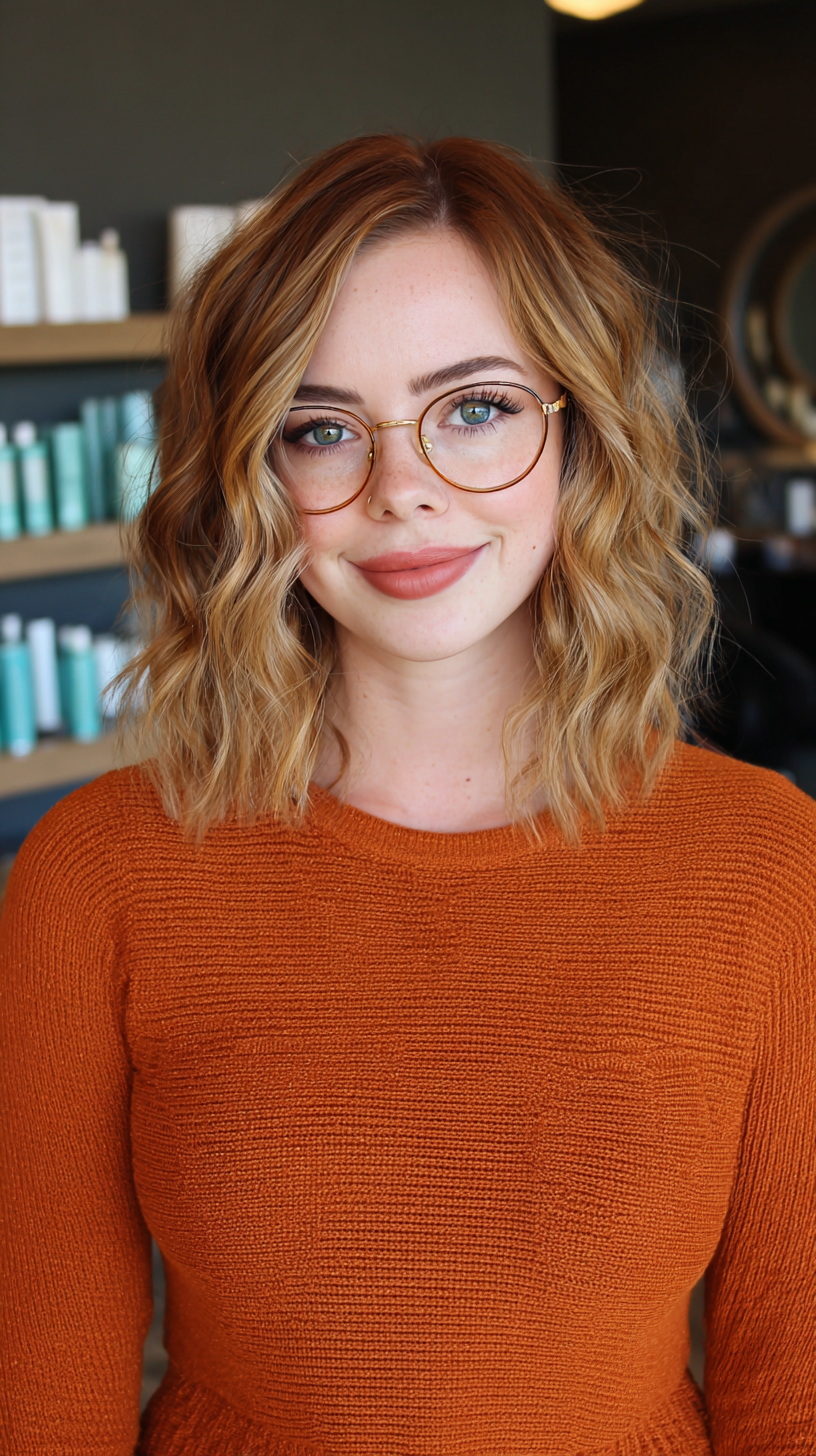
Fine hair and volume at shoulder length is not always a given, and this cut earns its bounce through the layering rather than through styling tricks, which means the volume is actually there and not just an illusion that collapses by noon. The loose waves add movement without weight, the side part is flattering, and the whole thing has a freshness to it that I find appealing on any age. A small amount of styling product for definition, nothing that’s going to flatten the root, and this is genuinely one of the more wearable versions of this type of cut I’ve seen in a while.
'); if(add_test == "no"){ window._mNHandle = window._mNHandle || {}; window._mNHandle.queue = window._mNHandle.queue || []; medianet_versionId = "121199"; (function() { var sct = document.createElement("script"), sctHl = document.getElementsByTagName("script")[0], isSSL = 'https:' == document.location.protocol; sct.type = "text/javascript"; sct.src = (isSSL ? 'https:' : 'http:') + '//contextual.media.net/dmedianet.js?cid=8CUTX14AQ' + (isSSL ? '&https=1' : '')+''; sct.async = "async"; sctHl.parentNode.insertBefore(sct, sctHl); })(); try { window._mNHandle.queue.push(function () { window._mNDetails.loadTag("646683264", "550x200", "646683264"); }); } catch (error) {} mediaad = 1; } //endnoadd if(add_test == "no"){ (function() { var sct = document.createElement("script"), sctHl = document.getElementsByTagName("script")[0], isSSL = 'https:' == document.location.protocol; sct.type = "text/javascript"; sct.src = (isSSL ? 'https:' : 'http:') + '//a.pub.network/latesthairstyles/pubfig.min.js'; sctHl.parentNode.insertBefore(sct, sctHl); })(); /* (function() { var sct = document.createElement("script"), sctHl = document.getElementsByTagName("script")[0], isSSL = 'https:' == document.location.protocol; sct.type = "text/javascript"; sct.src = (isSSL ? 'https:' : 'http:') + '//pagead2.googlesyndication.com/pagead/js/adsbygoogle.js?client=ca-pub-0498942454899924' + (isSSL ? '&https=1' : '')+''; sct.async = "async"; sct.crossOrigin = "anonymous"; sctHl.parentNode.insertBefore(sct, sctHl); })(); */ if (w < 900 ){ freestar.config.enabled_slots.push({ placementName: "LatestHairstyles_article_below_slideshow", slotId: "LatestHairstyles_article_below_slideshow" }); freestar.config.enabled_slots.push({ placementName: "LatestHairstyles_article_above_slideshow", slotId: "LatestHairstyles_article_above_slideshow" }); //freestar.config.enabled_slots.push({ placementName: "latesthairstyles_banner_mobile", slotId: "latesthairstyles_banner_mobile" }); //freestar.config.enabled_slots.push({ placementName: "LatestHairstyles_article_BTF_mobile", slotId: "LatestHairstyles_article_BTF_mobile" }); //freestar.config.enabled_slots.push({ placementName: "LatestHairstyles_article_below_video_mobile", slotId: "LatestHairstyles_article_below_video_mobile" }); //freestar.config.enabled_slots.push({ placementName: "FreeStarVideoAdContainer_Elements_Mobile", slotId: "FreeStarVideoAdContainer_Elements_Mobile" }); //freestar.queue.push(function() { //freestar.newVideo(video_placement_mobile); // }); //freestar.config.enabled_slots.push({ placementName: "LatestHairstyles_leaderboard", slotId: "LatestHairstyles_leaderboard" }); //var below_video_mobile_ad = document.getElementById("LatestHairstyles_article_below_video_mobile"); //below_video_mobile_ad.style.display = "block"; //setInterval(showAdEightSeconds, 8000); //setInterval(showAdSixteenSeconds, 13000); } else{ freestar.config.enabled_slots.push({ placementName: "LatestHairstyles_rightrail_articles", slotId: "LatestHairstyles_rightrail_articles" }); //freestar.config.enabled_slots.push({ placementName: "LatestHairstyles_BTF", slotId: "LatestHairstyles_BTF" }); freestar.config.enabled_slots.push({ placementName: "LatestHairstyles_article_below_slideshow", slotId: "LatestHairstyles_article_below_slideshow" }); freestar.config.enabled_slots.push({ placementName: "LatestHairstyles_article_above_slideshow", slotId: "LatestHairstyles_article_above_slideshow" }); //freestar.config.enabled_slots.push({ placementName: "FreeStarVideoAdContainer_Elements_Desktop", slotId: "FreeStarVideoAdContainer_Elements_Desktop" }); //freestar.config.enabled_slots.push({ placementName: "LatestHairstyles_leaderboard", slotId: "LatestHairstyles_leaderboard" }); } } }//end loaded ads } else{ if (w > 900) { if(mediaad == 0 ){ if(add_test == "no"){ window._mNHandle = window._mNHandle || {}; window._mNHandle.queue = window._mNHandle.queue || []; medianet_versionId = "121199"; (function() { var sct = document.createElement("script"), sctHl = document.getElementsByTagName("script")[0], isSSL = 'https:' == document.location.protocol; sct.type = "text/javascript"; sct.src = (isSSL ? 'https:' : 'http:') + '//contextual.media.net/dmedianet.js?cid=8CUTX14AQ' + (isSSL ? '&https=1' : '')+''; sct.async = "async"; sctHl.parentNode.insertBefore(sct, sctHl); })(); try { window._mNHandle.queue.push(function () { window._mNDetails.loadTag("646683264", "550x200", "646683264"); }); } catch (error) {} } //endnoadd mediaad = 1; }// end mediaad if (loadfreestar == 0 ){ if(add_test == "no"){ (function() { var sct = document.createElement("script"), sctHl = document.getElementsByTagName("script")[0], isSSL = 'https:' == document.location.protocol; sct.type = "text/javascript"; sct.src = (isSSL ? 'https:' : 'http:') + '//a.pub.network/latesthairstyles/pubfig.min.js'; sctHl.parentNode.insertBefore(sct, sctHl); })(); try { freestar.config.enabled_slots.push({ placementName: "LatestHairstyles_rightrail_articles", slotId: "LatestHairstyles_rightrail_articles" }); freestar.config.enabled_slots.push({ placementName: "LatestHairstyles_article_below_slideshow", slotId: "LatestHairstyles_article_below_slideshow" }); freestar.config.enabled_slots.push({ placementName: "LatestHairstyles_article_above_slideshow", slotId: "LatestHairstyles_article_above_slideshow" }); if (newsletter_email != '' && newsletter_email != 'none' ) { freestar.queue.push(function(){ freestar.identity.setIdentity({ email:newsletter_email, hashes: { sha256: 'SHA256_HASH' } }); }); } }catch(e){} }//noadtest loadfreestar = 1; var iframeurl = document.getElementById('iframeUrl'); if (iframeurl != null && iframeurl.value !="none") { var amazoniframe = document.getElementById('amazonIframe'); if (amazoniframe != null) amazoniframe.src = iframeurl; } } } else { //TOP //console.log("Boundaries " + contentadElement.getBoundingClientRect().top); if(contentadElement.getBoundingClientRect().top - offset_ca <= 0){ if(contentad == 0){ if(add_test == "no"){ contentad = 1; }//endnoadd } if(mediaad == 0 ){ if(add_test == "no"){ window._mNHandle = window._mNHandle || {}; window._mNHandle.queue = window._mNHandle.queue || []; medianet_versionId = "121199"; (function() { var sct = document.createElement("script"), sctHl = document.getElementsByTagName("script")[0], isSSL = 'https:' == document.location.protocol; sct.type = "text/javascript"; sct.src = (isSSL ? 'https:' : 'http:') + '//contextual.media.net/dmedianet.js?cid=8CUTX14AQ' + (isSSL ? '&https=1' : '')+''; sct.async = "async"; sctHl.parentNode.insertBefore(sct, sctHl); })(); try { window._mNHandle.queue.push(function () { window._mNDetails.loadTag("646683264", "550x200", "646683264"); }); } catch (error) {} } //endnoadd mediaad = 1; } } if (loadfreestar == 0 ){ if(add_test == "no"){ try { (function() { var sct = document.createElement("script"), sctHl = document.getElementsByTagName("script")[0], isSSL = 'https:' == document.location.protocol; sct.type = "text/javascript"; sct.src = (isSSL ? 'https:' : 'http:') + '//a.pub.network/latesthairstyles/pubfig.min.js'; sctHl.parentNode.insertBefore(sct, sctHl); })(); }catch(e){} if (w < 900 ){ try { freestar.config.enabled_slots.push({ placementName: "LatestHairstyles_article_below_slideshow", slotId: "LatestHairstyles_article_below_slideshow" }); freestar.config.enabled_slots.push({ placementName: "LatestHairstyles_article_above_slideshow", slotId: "LatestHairstyles_article_above_slideshow" }); // freestar.config.enabled_slots.push({ placementName: "latesthairstyles_banner_mobile", slotId: "latesthairstyles_banner_mobile" }); if (newsletter_email != '') { freestar.queue.push(function(){ freestar.identity.setIdentity({ email:newsletter_email }); }); } //freestar.config.enabled_slots.push({ placementName: "LatestHairstyles_article_BTF_mobile", slotId: "LatestHairstyles_article_BTF_mobile" }); // freestar.config.enabled_slots.push({ placementName: "LatestHairstyles_article_below_video_mobile", slotId: "LatestHairstyles_article_below_video_mobile" }); //freestar.config.enabled_slots.push({ placementName: "FreeStarVideoAdContainer_Elements_Mobile", slotId: "FreeStarVideoAdContainer_Elements_Mobile" }); } catch(e) { } //var below_video_mobile_ad = document.getElementById("LatestHairstyles_article_below_video_mobile"); //below_video_mobile_ad.style.display = "block"; } if (w < 900 ){ //setInterval(showAdEightSeconds, 8000); //setInterval(showAdSixteenSeconds, 13000); } }//noadtest loadfreestar = 1; var iframeurl = document.getElementById('iframeUrl'); if (iframeurl != null && iframeurl.value !="none") { var amazoniframe = document.getElementById('amazonIframe'); if (amazoniframe != null) amazoniframe.src = iframeurl; } } } }//end check pushly