
How to moisturise your scalp isn't something many of us think about until dryness, itching or flakes start to appear. While products (like leave-in conditioners) that focus on the lengths of our strands tend to get all the attention, a healthy scalp is the foundation of healthy hair. And just like the skin on our face, it can benefit from a little extra hydration from time to time.
“A dry scalp is often a sign that your skin barrier needs a little extra support, and there are several simple steps that can make a big difference,” says Alexandra Bowles, DO, a board-certified dermatologist at Mona Dermatology.
While anyone can experience scalp dryness, hair type and texture can play a role. “Coarse or curly textures tend to produce less sebum, so they’re more prone to dryness,” says celebrity hairstylist Vanessa Ocando. “Fine or straight hair lets oil travel down the shaft more easily, which can make the scalp seem less dry, but it’s also more prone to buildup. The texture impacts how oils are distributed through the hair.”
Nourish & Protect Daily Hair Serum
Jump to review
Living Proof Scalp Care Dry Scalp Treatment
Read more
La Bonne Brosse The Essential No. 2 Lilac Pink Hair Brush
Read more
Dr. Bowles adds that “people with finer or straighter hair may notice dryness more quickly if they’re over-washing or using products that strip the scalp. I always remind patients that their hair and scalp require a routine tailored to their unique biology. There’s no one-size-fits-all approach. Paying attention to how your scalp feels between washes is a helpful first step.”
Ahead, experts explain exactly how to moisturise your scalp, the ingredients worth looking out for and the common mistakes that could be making dryness worse.
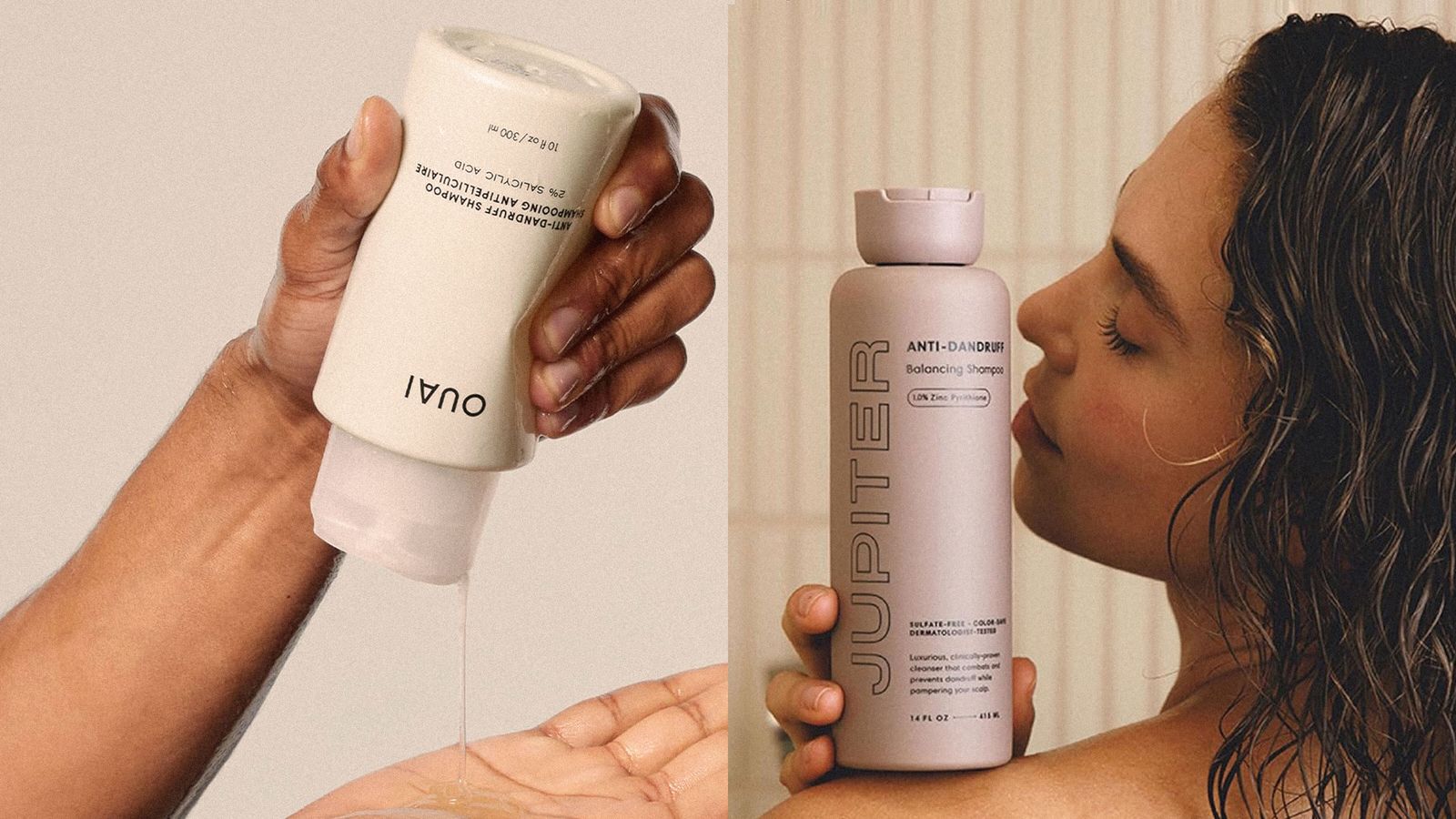
17 best shampoos for dry scalp, according to dermatologists
Gallery17 Photos
By Brigitt Earley, Georgia Lockstone, Humeara Mohamed and Georgia Brown
Just like the skin on your face, your scalp benefits from a combination of gentle cleansing, regular exfoliation and targeted hydration. According to Dr Bowles, the first step is choosing a shampoo that cleanses without stripping away the scalp's natural oils.
"When shopping for a shampoo, look for calming, hydrating ingredients such as aloe vera, glycerin or oat extract," she advises. These ingredients help soothe irritation while replenishing moisture levels and supporting the scalp barrier.
How you wash your hair matters too. Dr Bowles recommends steering clear of hot water, which can contribute to dryness, and opting for a lukewarm temperature instead. "Hot water can strip the scalp of its natural oils and lead to further dehydration," she explains.
Exfoliation can also play an important role in maintaining a healthy scalp. "Massaging with your fingertips or using a soft brush once or twice a week can help remove dead skin cells, allowing hydrating treatments to absorb more effectively," says Dr Bowles. She also recommends incorporating a scalp mask or serum into your routine, particularly formulas containing nourishing ingredients such as jojoba oil or squalane.
Nourish & Protect Daily Hair Serum
Living Proof Scalp Care Dry Scalp Treatment
Nécessaire The Scalp Serum
La'Dor Tea Tree Calming Scalp Treatment
The first step in treating a dry scalp is understanding what's causing it. While cold weather, low humidity, harsh shampoos and product build-up can all contribute to dryness, internal factors such as stress, hormonal changes and even food sensitivities may also play a role.
"If there are surface flakes, I love the Smoothing Sea Salt Scrub by Christophe Robin," says Monique McMahon, founder of Que Colour and global pro ambassador for Christophe Robin Paris. "It has amazing rock salt crystals in it that exfoliate and cleanse the scalp."
For dryness caused by external factors, both experts recommend focusing on gentle exfoliation and consistent hydration. "I always recommend starting with a hydrating scalp treatment," says Ocando. “If you have flakes or product build-up, take your time with a scalp scrub and really massage it in to exfoliate. Avoid over-washing or overusing dry shampoo, and consistently moisturise with a serum or oil that fits your scalp type.”
La Bonne Brosse The Essential No. 2 Lilac Pink Hair Brush
Augustinus Bader The Scalp Treatment
McMahon also recommends brushing the scalp regularly to help loosen flakes and distribute the scalp's natural oils. "Using those natural oils with a soft boar-bristle brush and really brushing the scalp, rather than the hair, will loosen any flakes from the scalp and get the blood flow going," she explains.
That said, persistent dryness, irritation or flaking isn't always a sign that your scalp needs more moisture. "A dry scalp can also be a signal of something going on internally, whether it be a food allergy, stress or hormones," says McMahon. If symptoms persist despite making changes to your routine, it may be worth speaking to a dermatologist or healthcare professional.
Generally, conditioners are meant to be applied on the mid-lengths down to the ends of the hair, not the scalp. Their purpose is to hydrate and soften the hair shaft, not the scalp. However, both Dr Bowles and Ocando agree that there are certain products on the market that have hydrating ingredients (think glycerin and panthenol) that can provide light moisture to the scalp or even some scalp-specific conditioners. “Just be mindful – using regular conditioner on the scalp can lead to buildup and greasy roots if it’s not rinsed out thoroughly,” says Ocando.
To prevent the hair from getting greasy, McMahon recommends taking the time to hydrate and moisturise the scalp before shampooing. “Scalp treatments that hydrate, moisturise, or soften the scalp will need to be shampooed out,” she explains. “Paired with the right product, you are guaranteed to not have an oily scalp.”
Ocando suggests using a water-based scalp serum, as they’re lightweight and fast-absorbing, and won’t leave behind that greasy residue. “I like to apply it right after washing, ideally within three to five minutes, while the scalp is still a little damp,” she says. “It helps the product absorb better and keeps your roots fresh.”
Aveda
Aveda Scalp Solutions Overnight Scalp Renewal Serum
Christophe Robin Hydrating Cream Scrub
Dr Bowles explains that dermatologists will seek out evidence-based solutions that tackle both the cause and symptoms of dryness. “Depending on what’s going on, whether it’s seasonal dryness, eczema, or product-related irritation, we may recommend treatments like medicated shampoos, topical corticosteroids, or hydrating serums with ingredients like hyaluronic acid or ceramides,” she says.
When it comes to more routine dryness, she suggests lightweight scalp oils or leave-in treatments that restore moisture without clogging hair follicles. “We also focus on preserving the scalp’s barrier by avoiding harsh products and encouraging regular, gentle exfoliation,” says Dr Bowles. “Every scalp is different, so our approach is always tailored to the patient’s specific needs and skin type."
Natural oils can be an effective way to replenish moisture and soothe dryness, provided they're used correctly. According to both Dr Bowles and Ocando, oils such as jojoba, coconut and argan can help lock in hydration and support a healthy scalp environment.
Ocando recommends applying just a few drops directly to the scalp before gently massaging it in with your fingertips. "Then brush it through to evenly distribute the oil," she says. “It boosts circulation, enhances shine and keeps the scalp balanced without overloading it.” For those dealing with irritation as well as dryness, Dr Bowles recommends aloe vera, which can help calm and soothe the scalp.
Supporting scalp health from within can also make a difference. "Staying well hydrated and eating a diet rich in omega-3 fatty acids, zinc, and vitamins A and E can support scalp health from the inside out," says Dr Bowles. As with most things in hair care, consistency is key. Natural remedies tend to work best when used regularly and paired with a gentle, non-stripping haircare routine.
Christophe Robin Cleansing Purifying Scrub with Sea Salt
Ceremonia Aceite de Moska Scalp Oil
There are a few factors that can throw your scalp off balance. Some of them include washing with harsh shampoos, particularly those with sulphates or alcohol; overusing scalp scrubs or clarifying products; and not washing frequently enough.
“Buildup from dry shampoo, styling products, or even unwashed hats, especially after working out, can all contribute,” Ocando explains. “And don’t forget about skin conditions like seborrheic dermatitis, eczema, or psoriasis, which can cause chronic dryness and irritation.” McMahon adds that hormones, stress, allergies, hot tools and diet can also cause a dry or irritated scalp.
Yes! Ocando says that products with drying alcohols or harsh ingredients like volumisers, strong-hold gels, or texturisers can slowly strip moisture from the scalp over time. “Overusing dry shampoo or clarifying shampoos can also lead to dryness or imbalance,” she says. “Even leftover residue or flaking from styling products can irritate the scalp if not washed out properly. It really comes down to balance and paying attention to what your scalp actually needs.” To look into shampoo ingredients, Mchon recommends a resource like the Yuka app “to check the formulations, see which ones are red flags, and avoid them.”
“The common ones are silicones, SLS, SLES, and resorcinol, and even natural oils can be highly irritating for the delicate scalp,” she adds. “For example, undiluted rosemary oil applied to the scalp can cause dryness and irritation.”
This article was originally published on GLAMOUR US.