
Randomized Controlled Trial
doi: 10.1186/s12916-023-03180-3.
Wei-Jie Chen 1 , Chun-Xia Gan 1 , Yang-Wei Cai 1 , Yang-Yang Liu 2 , Pei-Lin Xiao 1 , Li-Li Zou 1 , Qing-Song Xiong 1 , Fang Qin 1 , Xie-Xin Tao 1 , Ran Li 1 , Hua-An Du 1 , Zeng-Zhang Liu 1 , Yue-Hui Yin 1 , Zhi-Yu Ling 3
Affiliations
Randomized Controlled Trial
Wei-Jie Chen et al. BMC Med. 2023.
Background: High-power short-duration (HPSD) ablation strategy has emerged as a popular approach for treating atrial fibrillation (AF), with shorter ablation time. The utilized Smart Touch Surround Flow (STSF) catheter, with 56 holes around the electrode, lowers electrode-tissue temperature and thrombus risk. Thus, we conducted this prospective, randomized study to investigate if the HPSD strategy with STSF catheter in AF ablation procedures reduces the silent cerebral embolism (SCE) risk compared to the conventional approach with the Smart Touch (ST) catheter.
Methods: From June 2020 to September 2021, 100 AF patients were randomized 1:1 to the HPSD group using the STSF catheter (power set at 50 W) or the conventional group using the ST catheter (power set at 30 to 35 W). Pulmonary vein isolation was performed in all patients, with additional lesions at operator's discretion. High-resolution cerebral diffusion-weighted magnetic resonance imaging (hDWI) with slice thickness of 1 mm was performed before and 24-72 h after ablation. The incidence of new periprocedural SCE was defined as the primary outcome. Cognitive performance was assessed using the Montreal Cognitive Assessment (MoCA) test.
Results: All enrolled AF patients (median age 63, 60% male, 59% paroxysmal AF) underwent successful ablation. Post-procedural hDWI identified 106 lesions in 42 enrolled patients (42%), with 55 lesions in 22 patients (44%) in the HPSD group and 51 lesions in 20 patients (40%) in the conventional group (p = 0.685). No significant differences were observed between two groups regarding the average number of lesions (p = 0.751), maximum lesion diameter (p = 0.405), and total lesion volume per patient (p = 0.669). Persistent AF and CHA2DS2-VASc score were identified as SCE determinants during AF ablation procedure by multivariable regression analysis. No significant differences in MoCA scores were observed between patients with SCE and those without, both immediately post-procedure (p = 0.572) and at the 3-month follow-up (p = 0.743).
Conclusions: Involving a small sample size of 100 AF patients, this study reveals a similar incidence of SCE in AF ablation procedures, comparing the HPSD strategy using the STSF catheter to the conventional approach with the ST catheter.
Trial registration: Clinicaltrials.gov: NCT04408716. AF = Atrial fibrillation, DWI = Diffusion-weighted magnetic resonance imaging, HPSD = High-power short-duration, ST = Smart Touch, STSF = Smart Touch Surround Flow.
Keywords: Atrial fibrillation; Catheter ablation; High-power short-duration; High-resolution diffusion-weighted magnetic resonance imaging; Silent cerebral embolism.
© 2023. The Author(s).
PubMed Disclaimer
The authors declare that they have no competing interests.
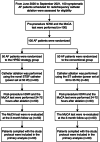 Fig. 1
Flowchart of the present study. AF atrial fibrillation, hDWI high-resolution diffusion-weighted magnetic resonance imaging, HPSD high-power short-duration, MoCA Montreal Cognitive Assessment, ST Smart Touch, STSF Smart Touch Surround Flow
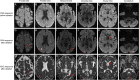 Fig. 2
The representative acute lesions identified by high-resolution diffusion-weighted magnetic resonance imaging. DWI Diffusion-weighted magnetic resonance imaging, ADC apparent diffusion coefficient magnetic resonance imaging