
Pressing the “Publish” button has been pretty difficult this week, but we are finally to the part of the series where I think everyone can find some common ground. While it’s true that sunlight has a lot of health benefits and cannot be fully replaced by supplements something else is also true: reckless sun exposure is dangerous.
I’m not just talking about sunburns, though. In my opinion, “recklessness” is also going out in the sun without a protective diet rich in healthy fats and antioxidants. Now, I’m using the term “reckless” loosely here because back when I ate the Standard American Diet (SAD) I simply didn’t know any better. But regardless of intention, I found that when my skin was infused with nutrients from the Standard American Diet (SAD) it simply didn’t perform well in a sunlit environment. When I switched to a traditional diet that changed, and I think there’s a correlation.
As you know, antioxidants are a hot topic right now because they eliminate free radicals and reduce cancer risk. Among the substances studied are omega-3 fatty acids, which used to be common in our diet but have been displaced by omega-6 fatty acids thanks to the prevalence of vegetable-based oils such as corn and soy. As our omega-3 ratios have dropped, skin cancer rates have risen. Researchers think there’s a connection.
In this study, the omega-3 fatty acid known as DHA not only stopped cancer cells from continuing their production cycle, it also resulted in apoptosis, which means the cancer cells died. Another study reached the same conclusion, saying “Omega 3 (ω3) fatty acids, including docosahexaenoic acid (DHA) and eicosapentaenoic acid (EPA), can effectively reduce the risk of skin cancer.”
So, what is going on here? When Dr. Elizabeth Plourde, a Clinical Laboratory Scientist (CLS) who specialized in cancer and DNA research, was recently asked how people who spend a lot of time in the sun should protect themselves, she said:
Or better than sunscreen, actually. In her book, Sunscreen: Biohazard, Dr. Plourde explains:
Now, if you’re thinking that antioxidants don’t really work because people who wear sunscreen stay pale and people who eat a nutrient dense diet and go out in the sun tan, consider this:
Melanin as a photoprotectant . . . kind of cool, huh?
Note: Suncreens made with zinc oxide and healthy oils/antioxidants work differently than chemical sunscreens. They are not perfect and the new generation of nano-particle sized zinc may actually increase cancer risk, but there are a few you can buy. I’ll be talking more about that later along with ideas for making your own. Titanium dioxide is not a good choice according to Dr. Pluorde because it rapidly photodegrades)
My personal list of “must have” antioxidant-rich foods, but there are just way too many. A traditional, nutrient-dense diet is rich in them by default, but there are a few worth mentioning because they have been found effective for UV protection:
Note: Personally, I avoid overly processed fish oils.Fermented cod liver oil from Green Pastures and unrefined Salmon Oil from Vital Choice are the only products I’ll use.
Note: I buy organic and local whenever possible, because the chemicals used on conventional produce reduce the benefits of antioxidants. For times when that’s not possible The Environmental Working Group has a list of conventional produce that is most heavily sprayed (the dirty dozen) and also ones that usually have the fewest chemicals (the clean fifteen).
Well, no, I think there’s more to it. Omega-3’s are an anti-oxidant, but they’re also a healthy fat. In traditional cultures, the ratio of omegs-6 fats to omega-3 fats was somewhere between 1:1 and 3:1.
However, now that most Americans consume vegetable oils instead of traditional fats such as tallow, lard, coconut oil and butter the ration is between 17:1 and 30:1(source). That’s important, because UVB rays interact the fats in our skin and traditional fats resist oxidation better than vegetable oils. In the studies about fish/fish oil listed above, I believe rebalancing the fat ratios in the body were a vital key to reducing cancer.
Good dietary cholesterol and sulfur are also important pieces to the puzzle says Dr. Seneff, who shared why they’re needed to produce Vitamin D in this post. Among other things, Vitamin D is needed for the body to synthesize the potent antioxidant glutathione.
A Real Food diet naturally contains cholesterol rich foods such as eggs, butter and lard, but sulfur is a little more tricky. Dr. Mercola writes that “Sulfur is derived almost exclusively from dietary protein, such as fish and high-quality (organic and/or grass-fed/pastured) beef and poultry. Meat and fish are considered “complete” as they contain all the sulfur-containing amino acids you need to produce new protein.” Other sources include pastured eggs, garlic, onions, brussel sprouts, asparagus, legumes and wheat germ.
BUT –
Certain crops grown widely in the 1800’s rapidly depleted sulfur from the soil, so even making an effort to consume these foods may not be enough. “In addition to making sure you’re getting high amounts of [traditionally] sulfur-rich foods in your diet, Dr. Seneff recommends soaking your body in magnesium sulfate (Epsom salt) baths to compensate and counteract sulfur deficiency. She uses about ¼ cup in a tub of water, twice a week. It’s particularly useful if you have joint problems or arthritis.” Another option is to add powdered MSM (biological sulfur) to your water.
Kind of. I wouldn’t break it down that way, exactly. A nutrient-dense diet is what I’m shooting for with my family because I know that in all aspects – not just sunlight exposure – it fuels beneficial processes within us everyday. For our family, I just don’t trust a SAD diet of processed foods to do that.
I’ve done my best to learn how to maximize the benefits of the sun without causing harm. For instance, I know that Vitamin D is synthesized on the surface of the skin and must stay there for 48 hours in order for us to absorb more than a minimal amount. So we rinse with water after a day in the sun, but only use soap on our armpits and groin area.² TMI, but I had to say it. I also know that sunburns are harmful, which is why I avoid them completely (and of course I make sure that my children do also!).
Here’s what I believe to be some common sense advice from Dr. Mercola:
Wearing suncreen at the beach 🙂
I think that last statement could be worded in a kinder way, but the bottom line is that a lack of sunlight is correlated with many cancers.
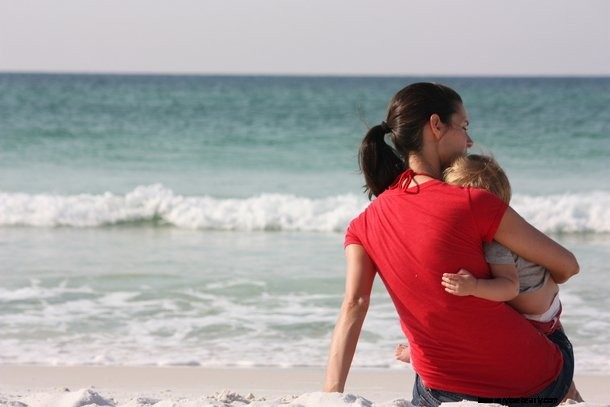
When the Potamus family hits the beach we ease into things, using protective clothing because we know our bodies aren’t used to getting so much sunshine in one day. And sometimes when we can’t get out of the sun for long periods we even (GASP!) wear sunscreen. In my next post I’ll tell you how to make your own with antioxidants and non-nanopartical zinc oxide.
For me, the bottom line is that everything – even water – can be dangerous at high enough doses. Sunlight is no different, but rather than avoid it completely we need to use common sense and make the best choice possible based on our unique situations/families/climates.
What Do You Think?