
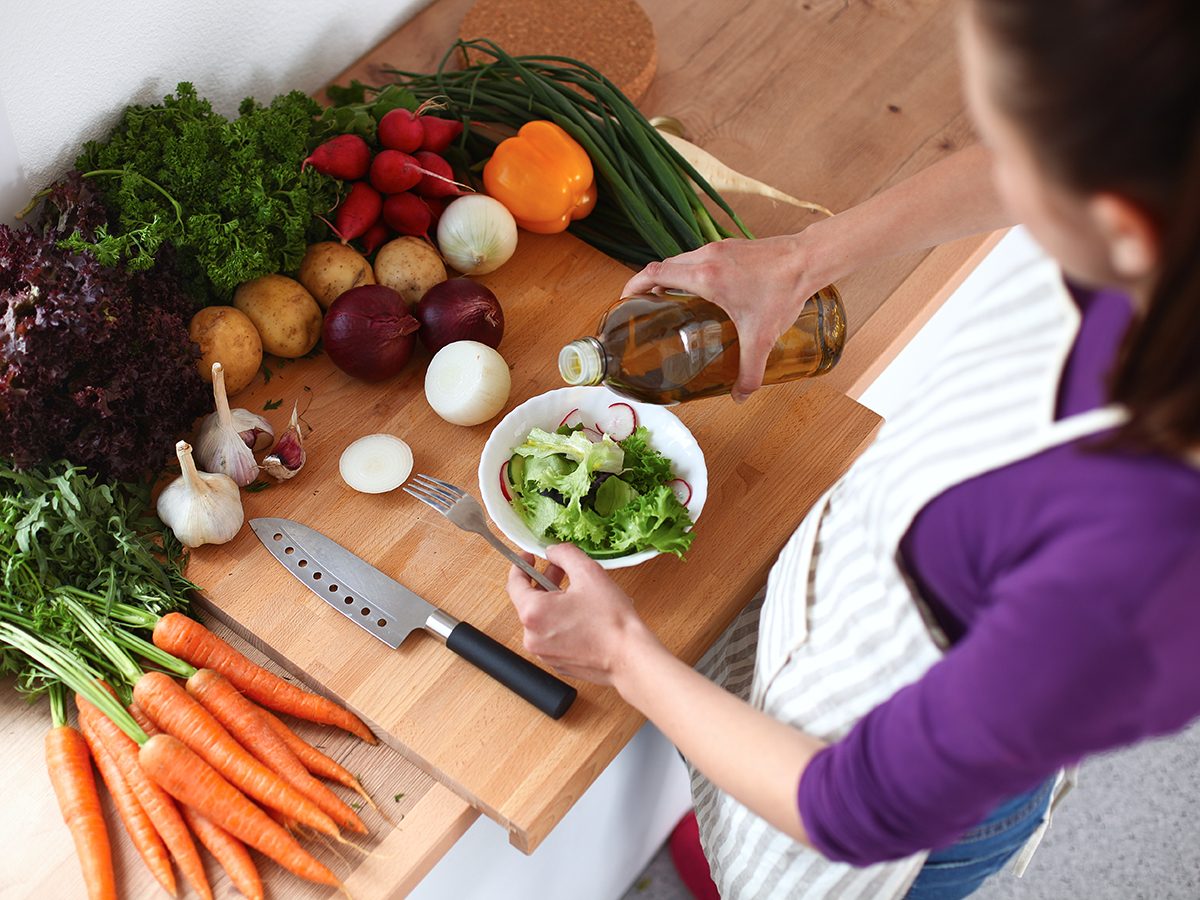
You may think you eat enough vegetables—but more than likely, you’re wrong. The USDA’s Dietary Guidelines recommend adults eat anywhere from five to 13 servings of fruits and vegetables per day depending on age, gender, physical activity, and overall health. According to the Heart and Stroke Foundation of Canada, however, over half of Canadian adults eat fewer than five servings of vegetables and fruits each day. And those aren’t just numbers; skipping those key nutrients can seriously affect your overall health. Read on to find out ways your body is telling you what it needs, and how to give it the nutrients it craves.
ⓘ 2 / 12
“The typical American meal of meat and potatoes may taste good, but it isn’t very colourful or loaded with balanced nutrition,” says Abby Sauer, RD, MPH, a dietician at Abbott. “Even though they may be favourite foods, plain pasta, rice, and bread don’t add much colour to your meals and don’t add much nutrition in terms of essential vitamins and minerals either.”
Help cut your salt intake with these low-sodium foods.

Consuming too little vitamin C can cause bruising easily, as well as increased bleeding around gums and decreased healing. Get vitamin C in red peppers, kale, red chili peppers, dark leafy vegetables, broccoli, brussels sprouts, and tomatoes.
Tomatoes are also one of the foods you’re spoiling by putting in the refrigerator.
4 / 12
Deficiency in folate can cause fatigue and anemia. This B vitamin can be found in dark leafy greens and starchy vegetables such as black eyed peas, kidney beans, lima beans, navy bean, asparagus, and lentils.
Consider these healthy green foods if you want to lose weight.
5 / 12
“If you lack vegetables in your diet and the important vitamins they provide, your body may lack the defenses it needs to release free radical fighters against viruses,” says Sauer. “Stock your fridge with dark leafy green vegetables, an excellent source of vitamin C, to give your immune system a boost and help shorten your recovery time.”
Have you tried these healthy ingredient substitutions?

While occasional forgetfulness can affect all ages, if you find your brain’s processing speed and efficiency fading as you get older, a lack of nutrients could be the culprit. “Lutein, a nutrient which has been shown in early research to enhance learning and memory, can be found in a variety of vegetables such as leafy greens, carrots, broccoli, corn, and tomatoes,” says Sauer. “Adding a few or all of these vegetables to your weekly meals can provide a helpful and natural brain boost.”
Still having memory issues? Try these brain-boosting dessert recipes.
7 / 12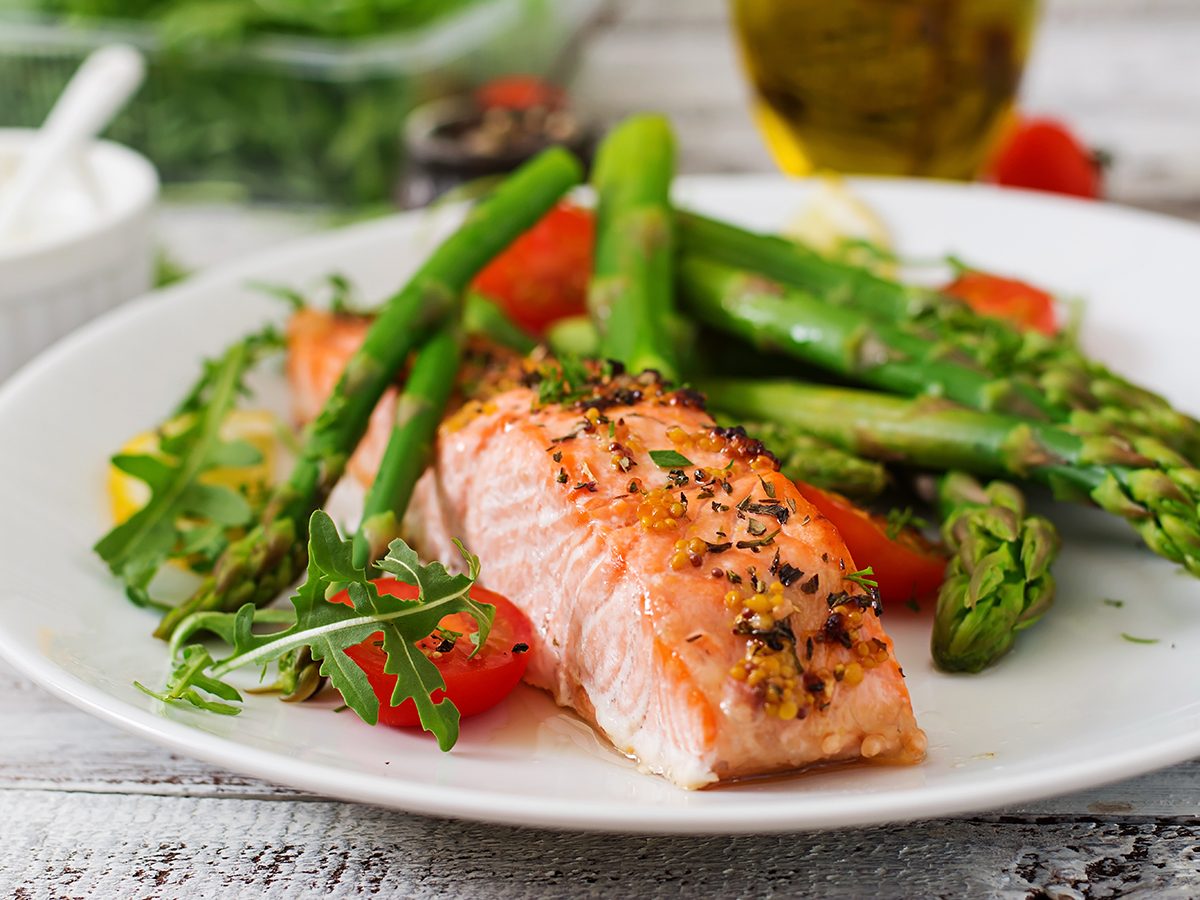
While stress is an inevitable part of life, how we eat and treat ourselves directly affects our body’s response. “Inflammation is your body’s natural response to stress, so if you’re not handling stress well, inflammation and its damaging effects could be taking place,” says Sauer. “Foods rich in anti-inflammatory compounds such as unsaturated fatty acids [like salmon and tuna], antioxidants, polyphenols and carotenoids [like green leafy vegetables and bright-coloured peppers] can help lower the levels of inflammation in the body and increase your mental capabilities to handle life’s curveballs.”
This one food can help you fall asleep—and boost your IQ.
8 / 12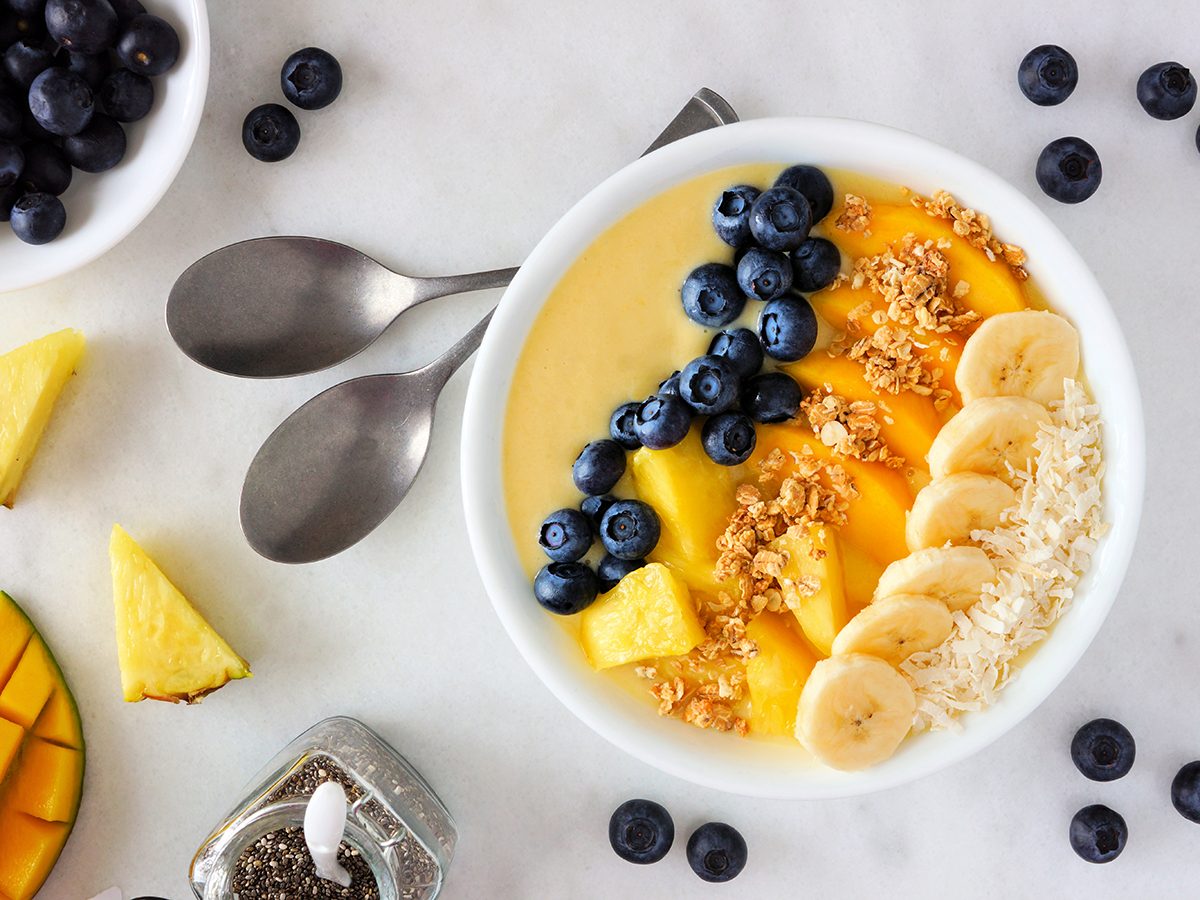
Fruits and vegetables contain potassium that may prevent muscle cramps, especially if you’re exercising or outside in hot summer months, says Emily Rubin, RD, registered dietitian in the division of gastroenterology and hepatology at Thomas Jefferson University Hospitals. “One medium banana has 422 mg of potassium.”
You’ll wish you’d known these low-carb food swaps sooner.

“Fruits and vegetables have fibre that makes you feel full so you eat less,” says Rubin. “Most fruits and vegetables are low in calories. Fruit may also help with those sweet cravings. Choosing a bowl of strawberries instead of ice cream can save you 200 calories.”
Learn how much fibre you should eat to prevent disease.
10 / 12
According to Adrienne Youdim, MD, of Beverly Hills’ Lasky Clinic, prep is everything. “Spend a Sunday grilling your favorite veggies in a grill pan,” says Dr. Youdim. “Make them in abundance so that they can be incorporated into your salad or bagged lunch.”
These are the foods nutritionists never eat late at night.
11 / 12
“Adding colour and variety to your daily meals with at least one serving of fruits or vegetables per meal can be as easy as unthawing a bag of frozen green beans, slicing up an apple, or adding a bowl of colourful berries to your meal,” says Sauer.
Berries are also one of the foods that can reduce your colon cancer risk.

“Many people avoid fresh vegetables because they go bad before having a chance to prepare them, they don’t like the chopping involved, or they’re not quite sure how to prepare them,” says Crystal Langlois RD, CSO, LD, clinical oncology dietitian at Cancer Treatment Centers of America at Southeastern Regional Medical Center. “Buying frozen vegetables is a great alternative that is convenient and easy. If all the prep work and chopping scares you, many grocery stores carry pre-chopped items in both the frozen and fresh produce areas.” If you still have that inner kid kicking and screaming to avoid eating your veggies, blend your veggies into shakes or smoothies. “The taste of vegetables is easily masked in shakes or smoothies by using fruits and fruits juices,” says Langlois. “Small diced mushrooms can be incorporated into hamburgers or meatloaf, as well.”
Next, check out the foods everyone over 50 should probably be eating.