
Even if you’re not up for going full-on vegetarian or vegan, there are so many reasons to move toward a more plant-based diet. Not only is eating less meat associated with a lower risk of chronic diseases such as type 2 diabetes and heart disease, it’s also better for the planet since beef production uses up a disproportionate share of the world’s resources.
The good news is, you no longer have to trek to a health food store on the outskirts of town to find plant-based options: There are loads of meat substitutes and plant-based proteins at the supermarket these days, and some are better for you than others.
Two of the biggies: tofu and tempeh, which people often confuse because they are both made from soy. Here’s the difference between these two products, plus how to figure out which one is right for you.
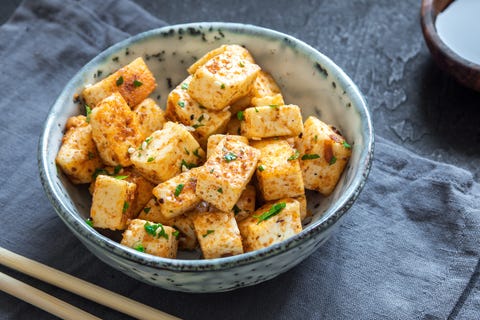
Tofu, those white or off-white bricks packed in water, are actually coagulated soy milk curds smushed into blocks. Kind of like the way cheese is made, the soy milk is heated, which separates the solids from the liquid, and then a coagulant is used to bind the curds together.
Depending on the type of soy used, what is added (if anything), and which coagulant is used, the texture might be firm (great for grilling) or softer, more like custard. “Calcium sulfate is the most common coagulant used,” says Abby Cannon, R.D., C.D.N., a dietitian in New York who specializes in sustainable, healthy eating.
This means that most tofu is basically fortified with calcium. “It’s a terrific source of protein, it’s a complete protein, and is high in lysine, an essential amino acid that can run low in vegan and vegetarian diets,” she says.
According to the USDA, 100 grams (around 3.5 oz) of tofu has:
Tofu also has no sugar and 176 g of calcium, which is over 17% of what you need in a day (and you’ll probably eat more than 3.5 ounces anyway).
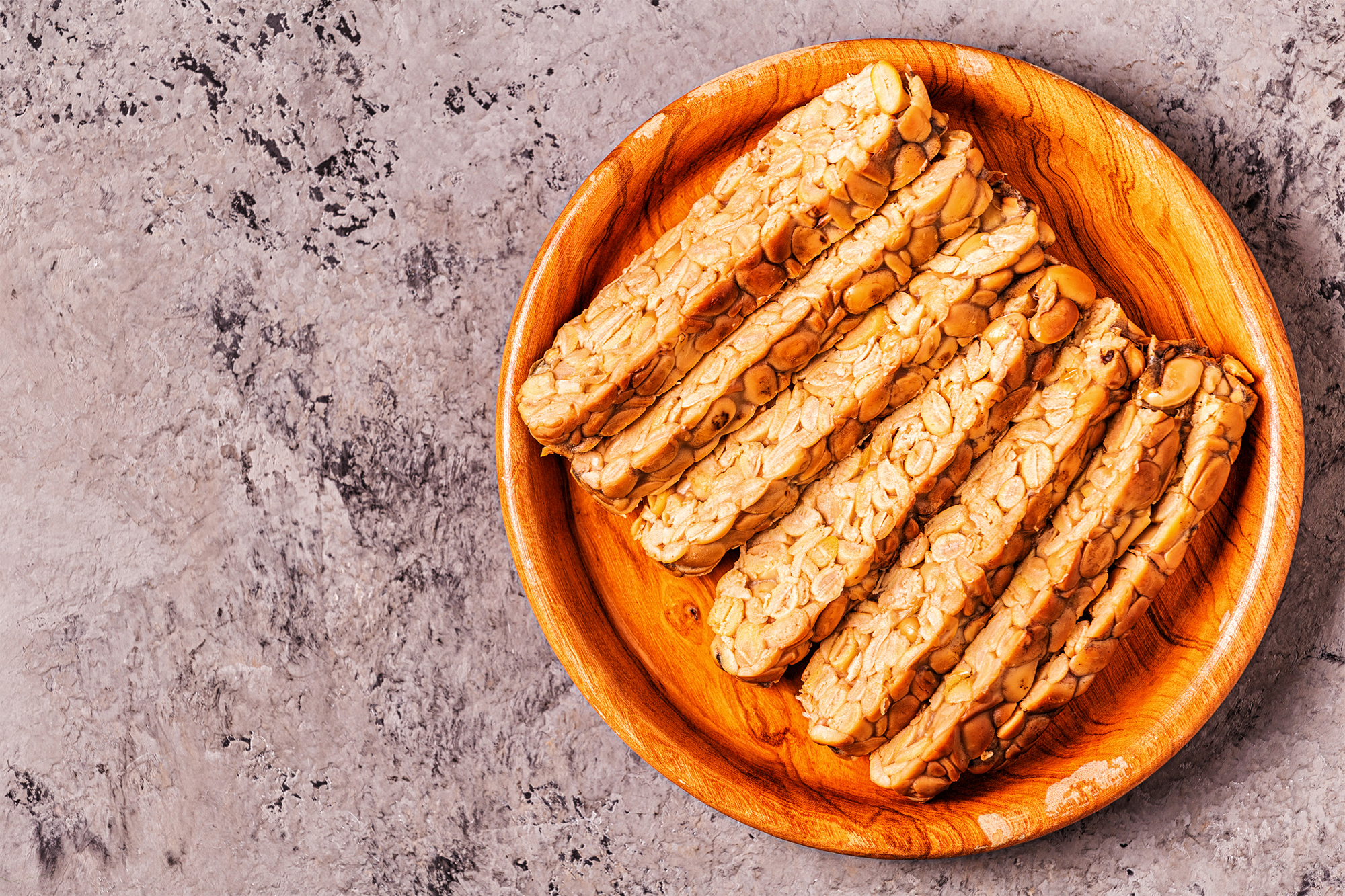
Tempeh is likewise a sliceable, cookable block, but it’s made from soybeans, as opposed to soy milk.
“Often if it’s really high-quality tempeh, you can see the beans within the block,” says Cannon. “Brands really vary, and if it’s more processed, it’ll look like just a glob.”
The critical difference, nutritionally speaking: The soybeans are fermented before being pressed. “Fermentation is the process is when bacteria and yeast are used to break down the carbohydrate naturally present in the food,” says Cannon. This puts tempeh in the category of probiotic foods, alongside certain yogurts and other fermented foods like kimchi.
“Any fermented food is good for gut health, and that applies equally to tempeh.” Like tofu, tempeh is a complete protein, and high in lysine.
According to the USDA, 100 g (around 3.5 oz) of tempeh contains:
While the USDA doesn’t list a fiber count, Tofurky Organic Soy Tempeh lists 4 g of fiber in a 3 oz-serving, as well as no sugar or sodium.
Either (or both) are great to eat two to three times a week, says Cannon. “They are pretty similar nutritionally,” she says. Neither has a strong taste, and so they take on the flavor of the sauce or seasoning you use to prepare them, she says. “It really depends on what you feel like.”
Whichever you pick, says Cannon, look for organic, non-GMO soy products, as conventional soy farming practices involve a lot of pesticides, so of which have been linked to cancer.
Still can’t decide? Here’s a side-by-side comparison:
You may have heard that, but for the vast majority of us, it’s not true. “Doctors may tell certain individuals who have had certain types of breast cancer [estrogen receptor positive breast cancer] to avoid soy,” says Cannon. Still, the current thinking is that not only does soy not increase the risk of breast cancer, it may possibly decrease it.
The confusion, according to the Oncology Nutrition practice group of the American Academy of Nutrition and Dietetics, is that while soy contains phytoestrogens (isoflavones, which have similar structure to estrogen), it does not contain estrogen itself. In any case, whole food soy products don’t contain a lot of isoflavones.
Supplements, however, may be another story: Supplements do contain more isoflavones, according to the Mayo Clinic, and there may be a cancer link at higher amounts. So with tofu and tempeh, like all other foods, it’s best to eat them in the least processed form you can find, says Cannon.
Go here to join Prevention Premium (our best value, all-access plan), subscribe to the magazine, or get digital-only access.