
I’ll be honest here, any anxious person who gets to spend extended time with a secure person is lucky.
Generally, secure people gravitate towards other securely attached people, and insecurely attached people tend to find each other.
(That’s based on research by Mario Mikulincer).
But general tendencies are just that: general tendencies. Sometimes secure people end up with anxious or fearful avoidant people (also known as disorganized attachment), so let’s talk about how they deal with them.

Securely attached people have a way of dealing with anxious people that inspires them to stop self sabotaging and helps them learn to self regulate through gradual replacement of the old negative voice in their head.
So let’s delve into how secure people approach anxiously attached people, and exactly what you can do to replace the old negative voice in your head the way a secure person would.
Firstly, secure people have low or non existent anxiety until life circumstances call for it. This is naturally inspiring for anxiously attached people.
As someone whose been healing from anxious attachment who met and married a secure man, the best thing about being with him was how he taught me by example to reduce stress levels to the exact amount that’s needed for the problem at hand.
We’ve been together 2 decades now, but I remember early on when I was studying my Law/Arts degree, I’d get highly stressed before my 3 hour exams.
Looking back, the stress and anxiety was arguably useless, because it was excessive for the situation.
One time, near the end of my 5 year degree, I got so stressed during one of the exams that I managed to start getting acutely ill right in the middle of the exam.
Yes, I know….very maladaptive. But that’s what can happen inside anxious people: the stress gets too high too quickly, robbing them of their objective thinking that would allow them to properly solve the problem at hand.
So securely attached partners tend to model a calm and calibrated stress response for anxious people, leading the anxious person to trust themselves more and slowly over time, develop independent self soothing thoughts.
One thought that my husband managed to place in my mind regarding my studies was:
“It’s easy. Don’t make it hard.”
Related: How A Secure Person Handles An Avoidant Pulling Away.
Secondly, secure people are free of chronic shame.
Stay with me now, I know nobody wants to talk about shame – least of all me, but remember: what we resist persists.
Anxiously attached people are unfortunately haunted by unnecessary shame, which a lot of us will be too afraid to admit because who the heck wants to admit that?
Related reading: 15 Signs of Abandonment Issues & How to Test For Them.
Admitting shame only begets more shame, since anxious people find it hard to regulate negative emotions. But again, stay with me.
Secure people received so much love from their caregivers – many secure people received a surplus.
This surplus elevates their esteem and creates a strong identity from infancy.
Because of this, the secure person is able to raise the anxious person’s self esteem and help them form a solid sense of identity, which is crucial for healing anxious attachment.
The secure person may say things like:
“There’s nothing wrong with you. You’re find just as you are.”
Or…
“it’s ok to trust yourself. You’re better than you think.”
Over time, these things impart a strong sense of resilience onto the anxious person.
However, we have to remember this:
Secure people tend to find other secure people, and any anxious person who finds a secure person is blessed.
Secure people generally prefer other secure people, but if they fall in love with an insecurely attached person, there’s no denying it, they will incur a cost for helping the anxious person.
So as beautiful as it is for the secure person to lead by example for the anxious person, we have to always remember and respect the toll it may take on the secure person long term.
As a mother myself, I’d never recommend my three securely attached sons to find insecurely attached people (if they were to ask), because I know they’re just going to be paying some other parent’s debts by helping the insecurely attached person.
Sorry if this seems like I’m being a downer, but this is why it’s so important to hug, hold and put your kids first.
It’s what they deserve, because if you don’t give your child secure attachment, they will pay the price long into adulthood.
If you’d like to discover your CORE attachment style and get a score for how secure you are, go and take my free attachment quiz. I’ll embed it below:
Fact: 54% of all women have insecure attachment styles and it affects their relationships daily. Answer the next 10 questions to discover what your attachment style is.
1. When it comes to relating to people in general…
I believe people are generally dependable and kind
I get attached to people easily and they often let me down
I don’t believe I can truly trust anyone
People will always come and go
2. To me, the word intimacy intuitively feels
3. In my relationship, I tend to constantly…
Worry that my partner will stop loving me one day
Feel repelled when my partner gets too intimate and close to me
Want to learn more about my partner without fear of judgment
Find faults in my partner
4. In my partner’s absence, I…
Look forward to seeing him again
Feel anxious and don’t know what to do
Feel incomplete
Feel free
5. In my most ideal relationship… (choose the one you feel strongest about.)
We would have our own lives & wouldn’t have to depend on each other
I would receive constant love and attention
We would be deeply connected above all else
To feel safe, I would want to have more control in the relationship
6. If a man that I was interested in started to banter with me…
I’d effortlessly banter back
I’d freeze and not know what to say
I’d redirect the conversation because banter is childish
7. If I suspect that my partner has been cheating on me…
I would rather not know about it
I’d ask them about it until they confess
I’d investigate it & find out as much as I can without coming to conclusions
I’d instantly get stressed out of my mind and become angry
8. When it comes to sex… I’d rather have
Casual sex with uncommitted partners
Intimate sex with a committed partner
I’d rather avoid sex.
9. If I share my deepest feelings and thoughts
Perhaps no one would care
Perhaps people may no longer love me
Perhaps I can resonate with the deepest feelings of others
I would never share my deepest feelings
10. If someone I’m dating suddenly becomes cold and distant…
I feel indifferent, even relieved as they’ll need less from me.
I feel like perhaps I’ve done something wrong or perhaps they’ve found someone new
I feel like I need to delve deeper into what is happening without feeling sorry for myself.
I feel angry and vengeful.
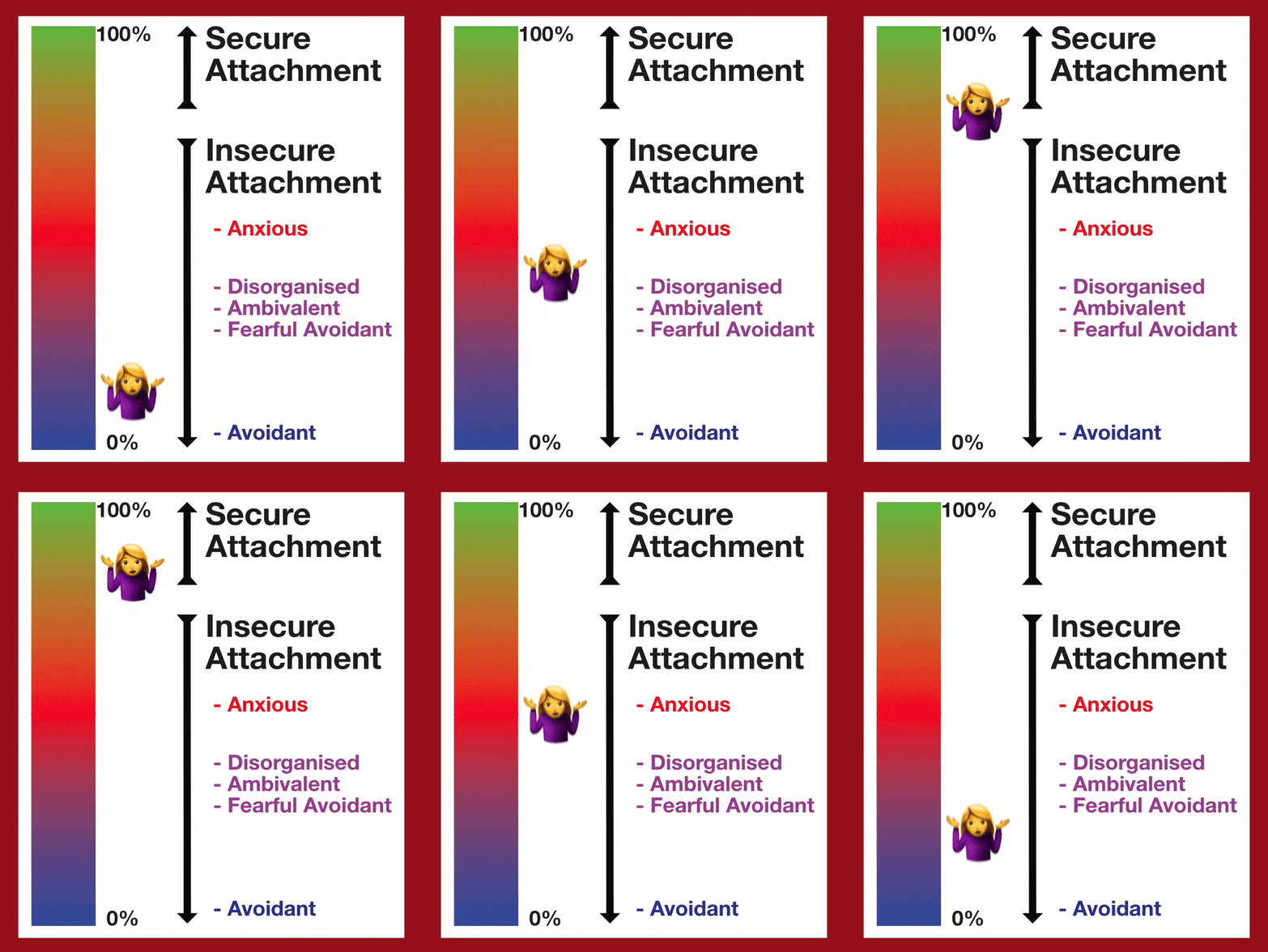
We are analysing your personal attachment style results right now and preparing a comprehensive summary. On a side note, it is important to understand attachment styles as a sliding scale rather than a fixed set of categories. Here are the reason why…
1. Your attachment style is not fixed but rather plastic, meaning you can over time heal an insecure attachment style, just as you can create more insecurity in your attachment style if you hang around toxic people in your life. Having a sliding scale offers you a solid direction to move towards.
2. Attachment styles should be considered as secure or insecure attachment styles with levels of severity when it comes to insecure attachment. This helps you understand how your own attachment styles developed in the first place and what direction you need to take in order to heal from attachment style traumas. (We’ll explain this further in the first email you’ll get from us.)
3. Almost everyone with an insecure attachment style has multiple categories and patterns within that insecure attachment, (of course to differing degrees).
In other words, you don’t just have a pure anxious attachment style. That may be the predominant pattern in your nervous system, but there is also avoidant in there too when you’re nervous system is overloaded and sick of being anxious all the time. This is why it’s more important to see this framework as a sliding scale and not just a mere set of categories.
So your personal attachment style will fit along the scale you see below.
In order to get your personal attachment style score, please enter your best email address so that we can securely send this to you. (As well as give you $3,765 worth of coaching bonuses to help you cultivate secure attachment within yourself!)
And yes, we'll treat your email like it was our firstborn.
Finally, remember that if you have true anxious attachment style yourself, it’s tempting to feel like you’re doomed.
This is because of the inherent negativity involved with the blueprint of anxious attachment.
However, if you use the information I’ve given in this article, and model after a secure person, you can begin to heal.
You’ll heal more (and faster) than you ever thought possible.
P.S. CLICK HERE to check out my full article archives! Or you may greatly benefit from one of our highly popular paid programs, CLICK HERE to see what we offer right now.
If you want to be supported by a warm community of high value feminine women, then join our Facebook Group. (It’s free and so incredibly valuable!) CLICK HERE TO join thousands of other women in our “High Value Feminine Women” Community.
By the way, while you’re at it, connect with me on social media.

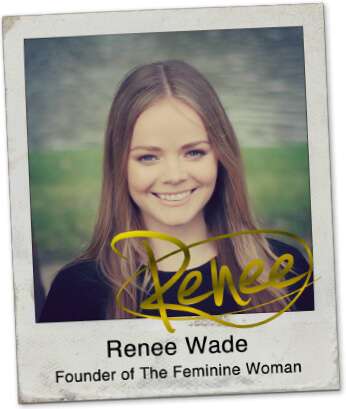
Renee is the founder of The Feminine Woman & co-founder of Shen Wade Media where we teach women how to show up as a high value high status woman whom easily inspires a deep sense of emotional commitment from her chosen man. She graduated with a bachelor of Law and bachelor of Arts majoring in sociology and psychology. She has been a dating and relationship coach for women in the past 15 years and together with her husband D. Shen at Commitment Triggers blog, they have positively influenced the lives of over 20 million women through their articles and videos as well as 10’s of thousands through paid programs through the Shen Wade Media platform.
Connect deeper with her work through the social media links below.