
One of the perhaps underutilized strength workouts for the quads is the wall sit—an isometric exercise that will test your lower-body endurance. As with every exercise, form is crucial in order to reap the benefits and avoid unwanted injury. With this in mind, read on to discover everything you need to know about wall sits, including how to modify for added intensity.
Meet the Expert
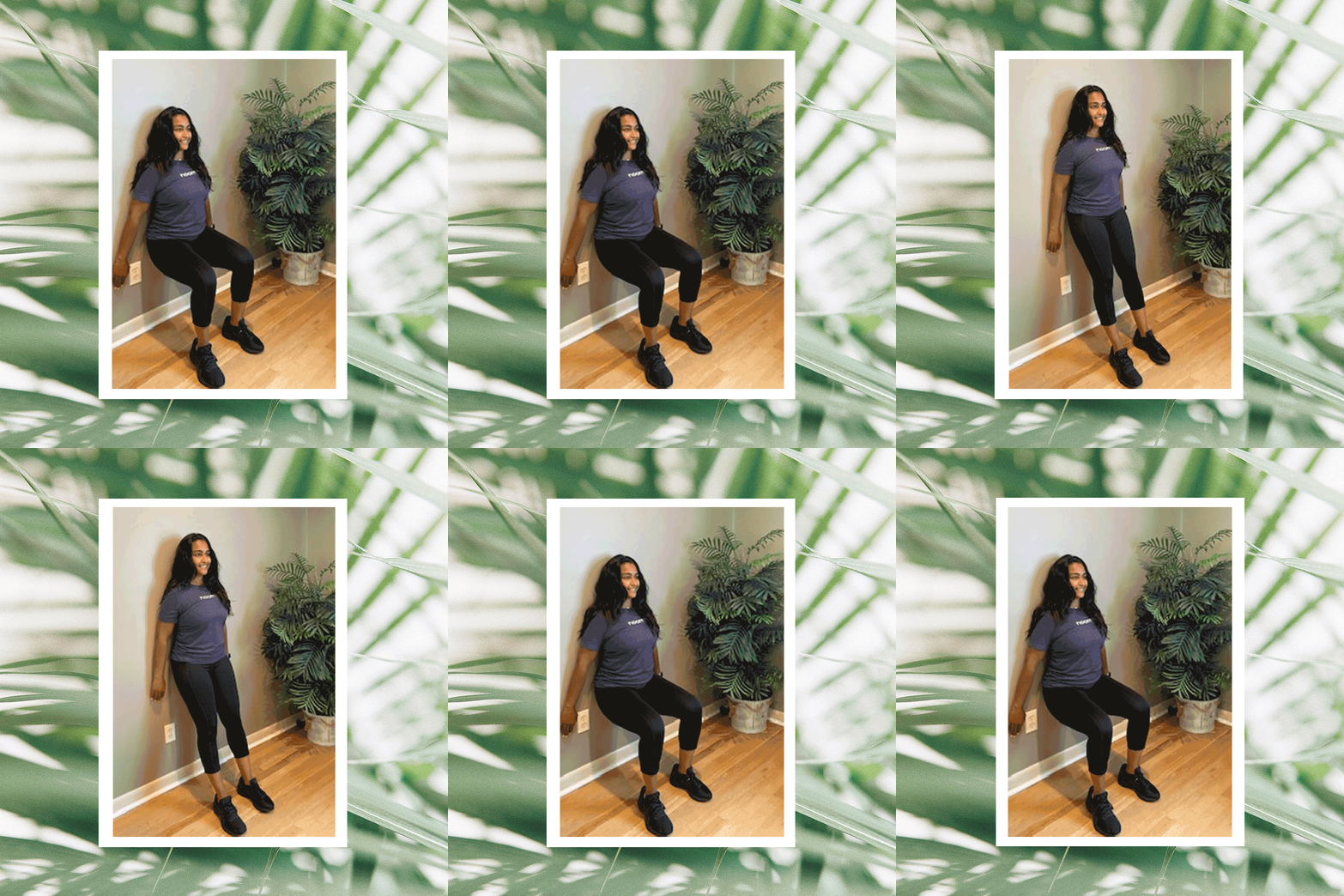
Nandini Collins / Design by Tiana Crispino
In order to perfect your wall sit, start by setting your body in the correct position. “The key components for getting into this isometric posture is to bring your feet hip-width apart, maintain a neutral spine, and sit down until you reach a 90-degree bend at the knee,” explains fitness expert and coach Tara Lyn Emerson. “Also important to avoid is the knee going behind the heel of the foot or in front of the toes."
Below, Noom Associate Coach Program Manager Nandini Collins shares a step-by-step guide to master your wall sit:
“It’s important to note that a burning sensation should be distinguished from pain, which feels like a sharp stab,” explains Collins. Stop the exercise immediately if any pain sets in.

Tara Lyn Emerson / Design by Tiana Crispino
Wall sits target many muscles in the leg, making it an incredible lower-body exercise. “This works out primarily the quads (front of thighs), but it also recruits the calves, glutes, and core muscles," says Emerson. Beyond this, the wall sit is also meant to work the hamstrings and even the adductor muscles—those of the inner thigh.
"The exercise builds muscular strength, endurance, and stability for the lower body,” says Collins. She adds: “When performed properly and mindfully, you can also incorporate more muscle groups, including the core.” This improved core strength and stability brings better control over your body to react with efficient movement, both on the gym floor and in everyday life.
Approach the wall sit from the viewpoint that it can easily be adapted for those tackling the exercise for the first time, just as it can be creatively amped up for an added challenge.
Given the low impact and adaptability of this exercise, wall sits are generally suitable for most of the general population. “In fact, for those suffering from lower-back pain while performing squats, the wall sit is actually a great alternative for added support,” notes Emerson. However, there are safety considerations. "If you are taking this exercise to your absolute limit (i.e., "until failure"), I do suggest having a ball underneath you so you can slide down the wall to sit instead of trying to get up under extreme fatigue," says Emerson.
In some cases, wall sits should be avoided altogether, specifically for those with lower-body injuries or recovering from surgeries. “This is especially true for those who have undergone surgery on the knees, hips, or ankles. They should not perform wall sits until their physicians or physical therapists have cleared them to do so,” states Collins. “Once they're cleared by a medical professional, wall sits are a great rehabilitation exercise to continue the healing process from injuries and to regain strength and endurance in the lower body.”
Wall sits are a strength-, endurance-, and stability-building exercise which stimulates many lower-body muscles at the one time. To perform a wall sit with proper form, ensure feet are hip-width apart, weight is shifted to the heels, the back is in contact with the wall, and the abdominal muscles are engaged. While wall sits are an exemplary exercise for building strength, improving endurance, and working on the core, they aren’t suitable for those recovering from lower-body injuries or surgeries. However, they are a helpful rehabilitative exercise, as well as a great addition to your workout, given the variations that challenge your strength and endurance.
8 of the Absolute Best Bodyweight Glute Exercise