
In most workouts, you'll run into a few hard exercises, but you can get your way through them. Pull-ups, however, can be a different story—no matter how much you want to lift your body weight to the bar, you may not be able to, at least not immediately. But by building up strength and focusing on your form, you can work your way up to mastering that elusive pull-up. Here, two experts detail exactly what muscles are used during pull-ups, how to do a proper one, and how to modify the exercise to your needs.
Meet the Expert
Pull-ups are upper body strength exercises that involve hanging from a bar and pulling your entire body up. Pull-ups are great functional exercises, says Prentiss Rhodes, NASM Master Trainer, because the muscular development and coordination gained from doing them can carry over into activities such as climbing.
Pull-ups obviously require your arms, but they use various muscles at all once (which is what also makes them challenging to do). The main muscles used, explains Rhodes, include:
“A major benefit of doing pull-ups in your training program is that it is a multi-joint/compound closed chain exercise,” says Rhodes. In other words, you can train many different muscles as opposed to doing single-joint isolation exercises.
In doing pull-ups, you also get traction of the spine, core muscle engagement, increased proprioception and coordination, enhanced grip strength (think about carrying those grocery bags for that upcoming summer barbecue), confidence, and better posture, says Bradford Rahmlow, CPT and trainer at Rumble Boxing.
And since they’re a bodyweight exercise, “you have the benefit of getting more engagement from your stabilizing muscles as opposed to training on machines that may train some of the prime mover muscle groups,” says Rhodes.
The main difference between a pull-up and a chin-up is how you position your hands. With the pull-up, your palms are facing away from you, and with the chin-up, your palms are facing you. Even though pull-ups and chin-ups train the same muscles, the amount of muscle activation differs slightly based on how your hands are positioned, says Rhodes.
Both work the upper body and core, adds Rahmlow, but chin-ups work the biceps and chest more, and pull-ups target the back muscles more.
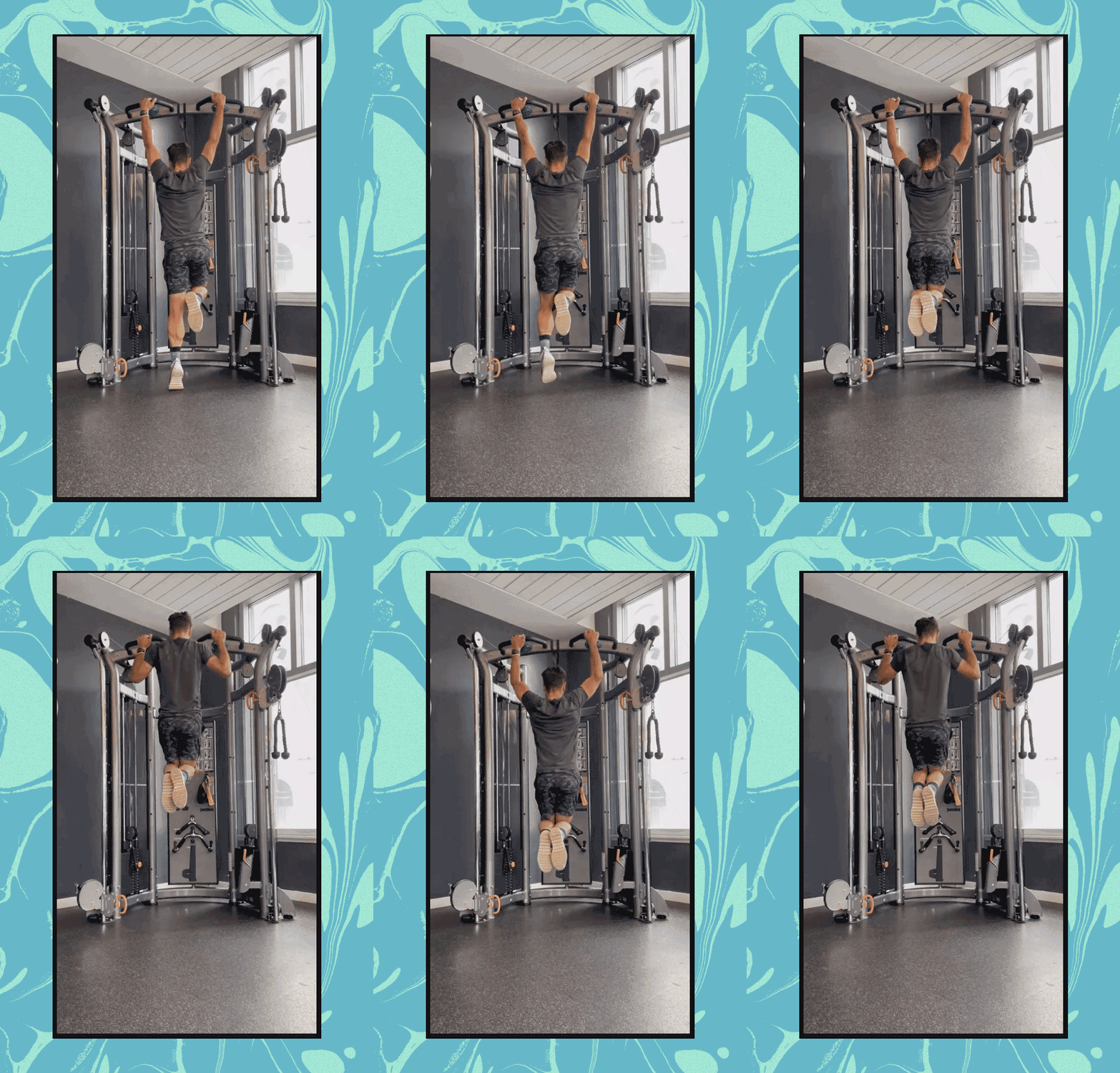
Bradford Rahmlow / Design by Tiana Crispino
There are a few things to keep in mind when you’re training to do a pull-up. Make sure you’re maintaining good posture and keep the core and glutes tight. “Like the push-up, the pull-up is also a moving plank,” says Rhodes. In addition, take the time to build up adequate strength and avoid training this movement to failure.
Another key factor in working on your pull-ups is your grip strength, says Rahmlow. You can find a bar and hang. Once you've worked on your grip strength and just hanging for a little bit, you can play around with elevating and depressing your shoulders while you’ve got your bodyweight connected to your grip.
Note it's important that you have enough core strength and endurance before attempting your first pull-up. It is also important to keep pulling with straight arms for the duration of the exercise.
In this progression, you're working up to a single-arm pull-up, so you should have already spent time building up adequate strength and endurance.
Pull-ups start with a strong core, says Rahmlow. “If you don’t have the ability to engage the core to connect the upper and lower body, it will be very difficult to control your momentum when you start to hang.” In addition, if you have any existing injuries (e.g., shoulder or rotator cuff) or special considerations, consult your doctor before trying a new training modality.
Pull-ups are a great arm, core, and back exercise that require a seemingly simple movement, but doing one can be harder than it looks. The good news is that potentially anyone who builds up the necessary strength can do a pull-up. If at first, you don’t succeed, keep trying, says Rahmlow. “The unassisted pull-up without a band is tough to achieve. Work on your plank if you are struggling. Work on your hang. Work on your shoulder mobility. Get the bands involved. Don't be discouraged if it doesn't happen right away. Patience and persistence will help you achieve anything you desire inside and outside of the gym."
Chin-Ups Are a Challenge—Here's How to Do Them