
Although rare, some women report gaining weight temporarily while on the birth control pill. This is because birth control can lead to the retention of fluids for a short period of time. Read more about birth control and its other risks and symptoms.
Mindful Media / E+ / Getty Images
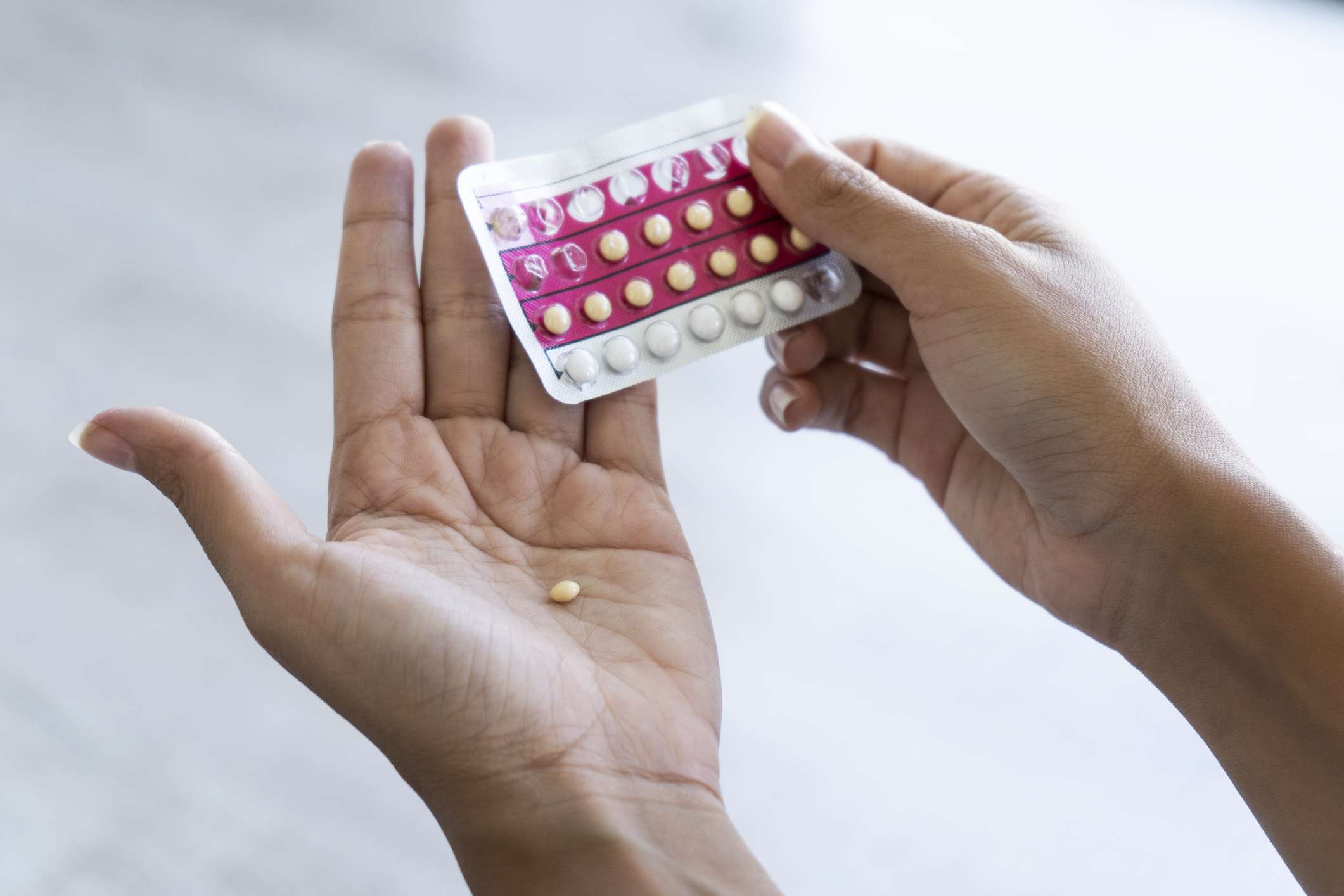
A variety of birth control methods exist to help sexually active individuals prevent pregnancy. The pill is one of the most convenient and commonly used contraceptive methods.
There are two types of birth control pills:
Though a highly effective contraception method, birth control pills carry some concerns for women worried about side effects such as weight gain. However, research indicates that the association between weight gain and birth control is limited.
While there may not be significant weight gain due to birth control, some individuals report gaining weight while using the pill, especially when first starting the pill.
In the past, birth control formulas included higher levels of hormones, leading to instances of weight gain. Today, much lower levels of estrogen are used.
An increase in estrogen levels can cause a person to retain water. Therefore, the combination pill is more likely to cause weight gain because it contains estrogen. However, this fluid retention may be minimal and should dissipate within a few months.
Gaining weight while taking birth control may be attributed to other factors unrelated to the pill, including:
A study that examined progestin-only pills have revealed that after six months to one year of use, participants gained less than 5 pounds. Ultimately, a significant change in weight is not expected with birth control.
Few contraception methods impact weight. Birth control injections and implants may cause some fluctuation in weight.
Specifically, depot medroxyprogesterone acetate (Depo-Provera), a progestin-only shot, has been linked to initial weight gain. Even though there is some research indicating weight gain with these methods, the evidence is minimal.
Aside from fluid retention that may cause initial fluctuations in weight, other side effects are possible with the pill, including:
Everyone responds differently to changes in hormones from birth control. It is always recommended to communicate with a healthcare provider when noticing new or worsening symptoms.
If you have migraines, you should discuss this with your healthcare provider, as they may recommend using a form of birth control that doesn't contain estrogen, particularly if your migraines are associated with aura (sensations that precede or accompany a migraine).
Working with a healthcare provider can help identify and monitor any causes of weight gain while taking birth control and develop a plan to combat it.
Recommendations for preventing and managing weight gain include:
Talking with a healthcare provider about available options can help you make an informed decision to manage any side effects.
If you are experiencing negative side effects from taking the pill, discuss other birth control options with your healthcare provider.
Research on the relationship between birth control pills and weight gain indicates that oral contraception does not have a significant impact on weight. Though some people experience weight gain, this may be due to increases in estrogen levels resulting from the combination pill. This weight gain is attributed to water retention and dissipates over time. Consulting with a healthcare provider can help inform your decision about what birth control method to use and how to tackle any side effects.
The possibility that the pill could cause changes to your body may be concerning, and it may factor into your decision to use this type of contraception. Any potential concerns you may have are valid and can easily be explored with your healthcare provider. The decision to take birth control is a personal choice and many people try different forms of contraception before finding the right option for themselves.
Research suggests that the pill does not cause significant changes in weight. Some individuals report gaining weight initially when starting on the pill. However, this may be due to fluid retention, which is possibly due to estrogen if you are taking a combination pill (includes progestin and estrogen). Progestin-only pills do not contribute to weight gain.
Weight gain due to birth control, specifically an increase due to water retention, may dissipate on its own in a matter of months.
For people with polycystic ovary syndrome (PCOS), a healthcare provider may prescribe birth control to regulate and balance hormones. Weight gain tends to be a symptom of PCOS, not a result of the birth control being administered to help manage symptoms.