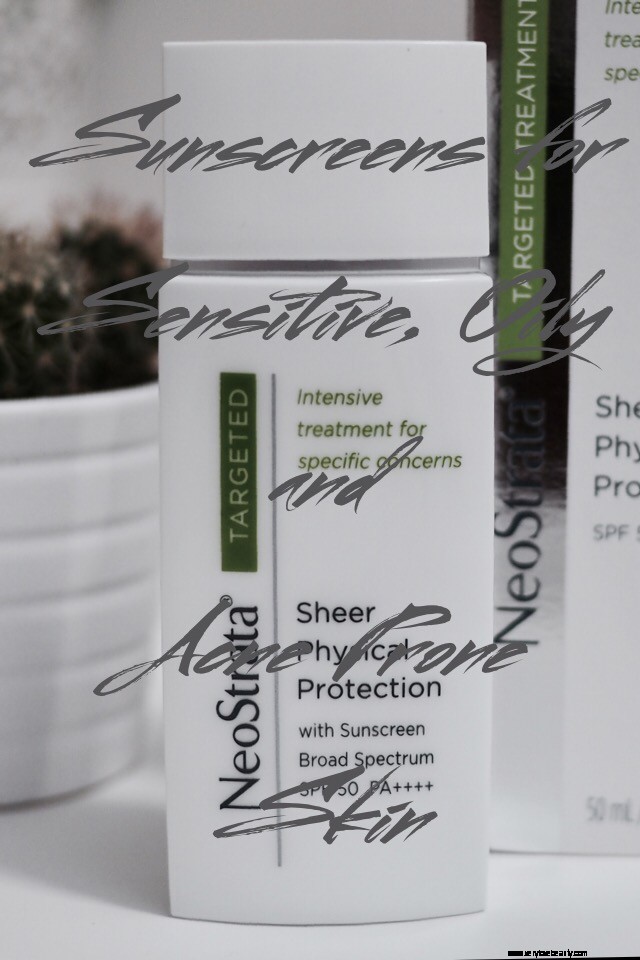
 Now the sun is coming out it’s time for walks on the beach and Pimms on blankets in the park. It’s also to think about protecting your skin from sun damage. I’m all over using acids and retinoids for improving my skin condition. They have helped my appearance no end. The drawback is having to use sunscreen on a daily basis. It’s really important. Without sunscreen you’re going to end up with problems with pigmentation, worsening of wrinkles and changes in texture. I’ve finally found some sunscreens that don’t look white or feel sticky. Here is a guide on what to look for in sunscreen and some really good suggestions.
What we need from our sunscreen is protection against the two types of Ultraviolet radiation. UVB, aka UV Burning, are the high energy rays that cause skin redness and skin cancer. The SPF number on your sunscreen bottle refers to protection from UVB. UVA, aka UV Aging, rays have a shorter wavelength, they can penetrate clouds, glass and the deeper layers of the skin. They can cause loss of collagen, loss of skin firmness, wrinkles, increased pigmentation and cancer! UVA is the type of UV radiation emitted by sun beds, so obviously avoid those. UVA protection is referred to by the PPD (persistent skin darkening) number and you might see it denoted with stars or plus signs.
There are so many sun protection products on the market, it’s hard to know which one to choose. I have oily acne prone skin and it took me a long while to realise that Sunscreen is a real problem for my skin. I wore it all the time and always had a face full of spots. In a cruel twist of fate, all efforts to do the right thing by your skin can leave you looking shiny, white and spotty.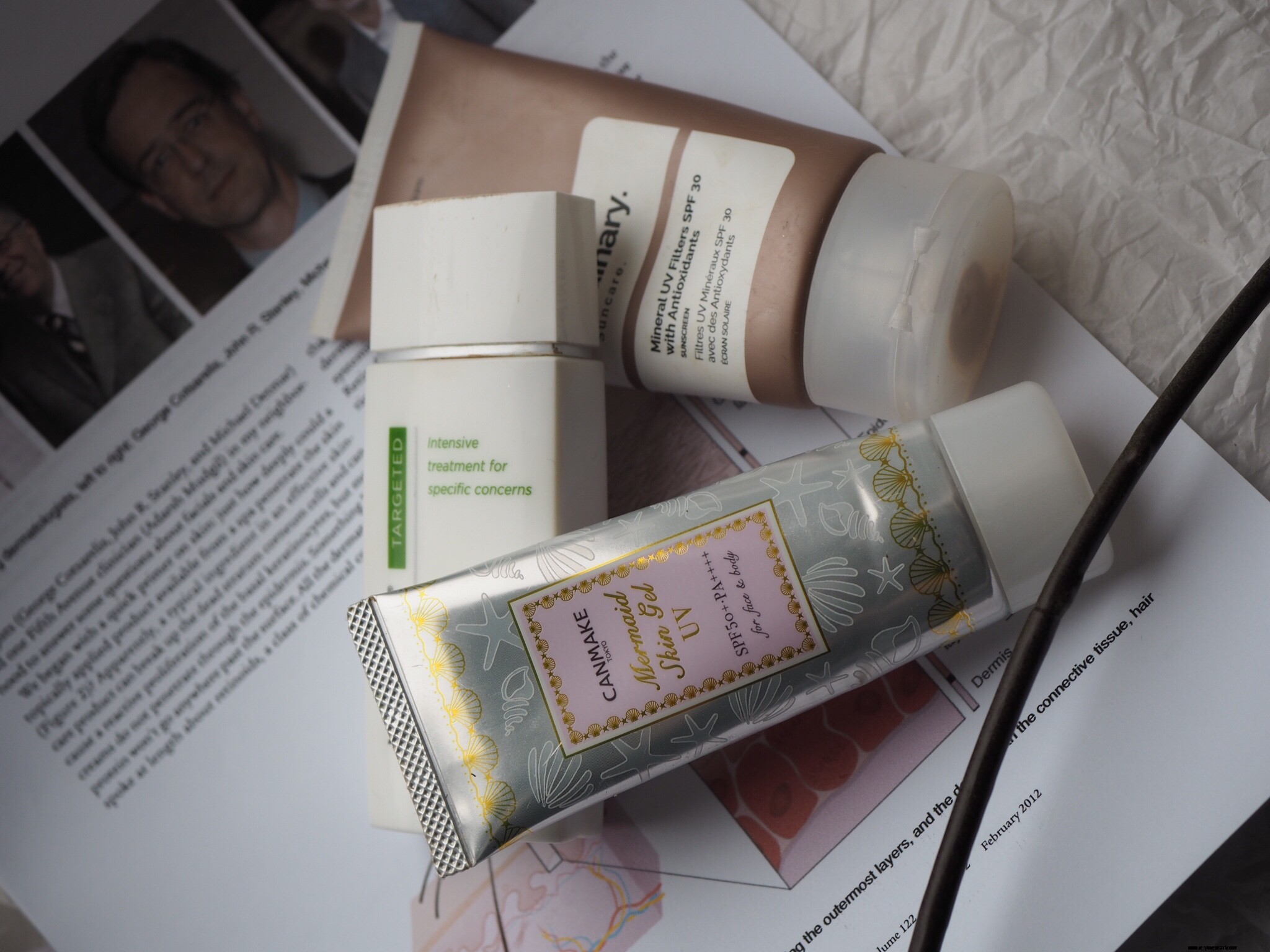
As with most Skincare products, when you’re choosing your sunscreen the first thing you must do is read the bottle. There are two sorts of ingredient that provide spf-
Chemical Sunscreens– look out for these words in the ingredient list-
Chemical sunscreens have different protective abilities and can protect from UVA and UVB. They are colourless, odourless and generally thin consistency making them functional face cream additives. They aren’t white coloured or thick like some physical sunscreens.
The problem with chemical sunscreen is that it breaks down in sunlight, after a couple of hours they won’t protect you and you’ll need to reapply regularly. Chemical sunscreen has the potential to be irritating to some and possibly cause acne breakouts and flare ups in those with sensitive skin. There have also been questions about the safety of chemical sunscreens in the long term, this is somewhat alarming considering we’re smearing these chemicals on our children.
Physical Sunscreens-
Physical sunscreen reflects sunlight and isn’t broken down so it can give you all day protection. Zinc Oxide protects against both UVA and UVB radiation, Titanium Oxide is only good for UVB protection. Zinc and Titanium Oxide don’t block pores or irritate skin so it’s great for people with sensitive skin or acne. Physical sunscreen is also suitable for use near the eye. Chemical sunscreen can cause eye irritation.
The downside is that Zinc and Titanium Oxide is white and thick and gives skin that typical sunscreen ghost appearance, especially in photographs. Sunscreen manufacturers have got round this by making the particles very small (look for the word “nano” in the ingredients list). Physical sunscreen can cause dryness so you will also have to moisturise when using it. In my view Zinc Oxide is the sunscreen of choice- its broad spectrum and not likely to cause a flare up.
Sun protection ingredients can break down when exposed to sunlight, when they do they release free radicals which can damage the skin. It is important, therefore, that sunscreen also contains antioxidants to counteract any damage.
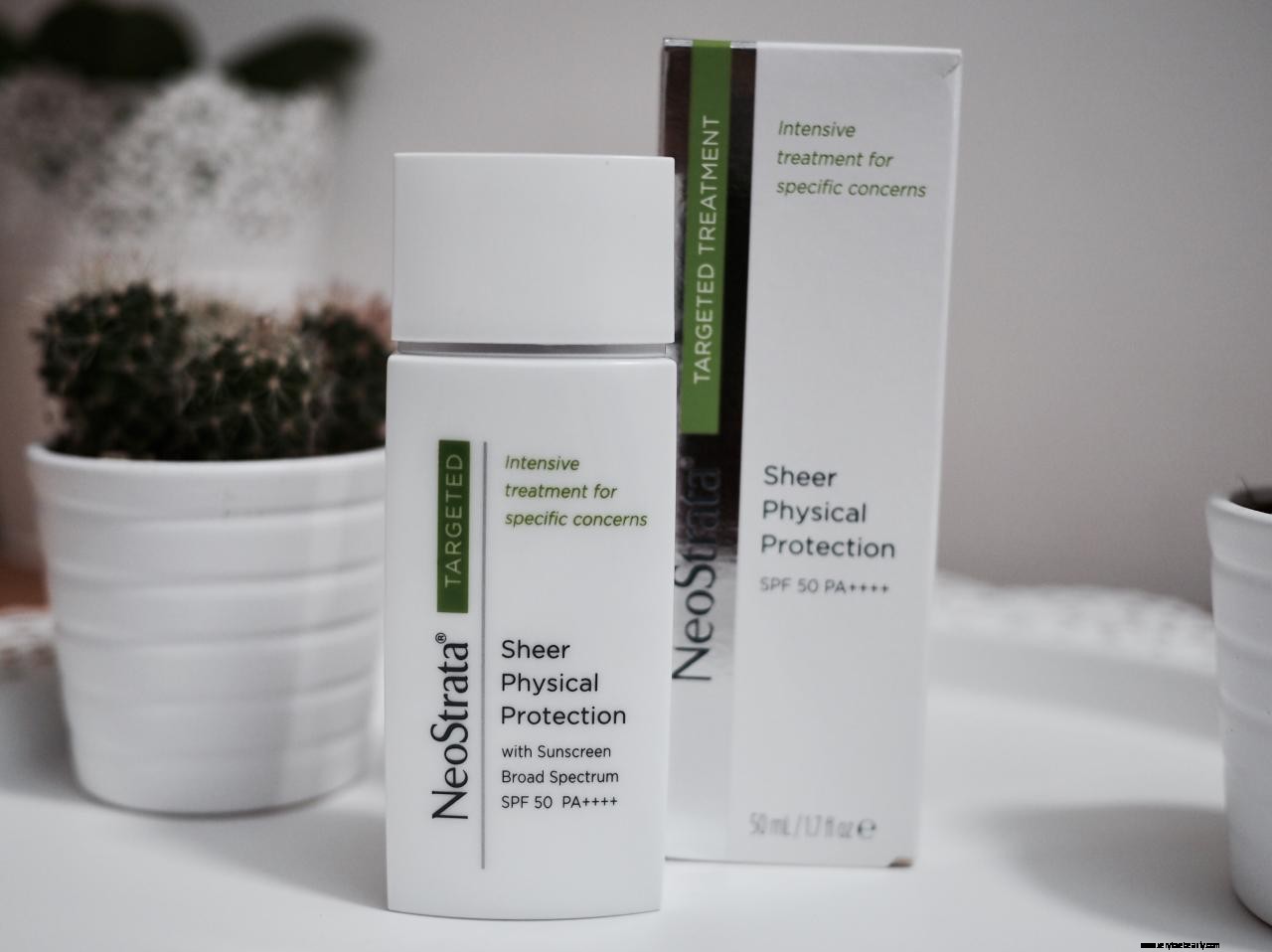
If you suffer with reactions from sunscreen usually, try to find a product with only physical sunscreen. This is a list of sunscreens that do not contain any chemical sunscreen at all and their active ingredients are Zinc and or Titanium Oxide. These are my picks-
I could not find any physical sunscreens that are widely available and cheap in the UK unfortunately. They all contain some chemical sunscreen. I’ve tried loads of different shop bought sunscreens- I’ve posted before about Soltan Dry Touch factor 50 and compared it to La Roche De Posay. They all worsen my acne. I’m fairly sure it’s the chemical sunscreen agents in them that are causing the problem.
I’m sorry the list isn’t longer. The choice of sunscreens containing no chemical agents available in the U.K. is woefully small. I literally wandered round Boots reading all the labels. None of the big brands, apart from Clinique, do one.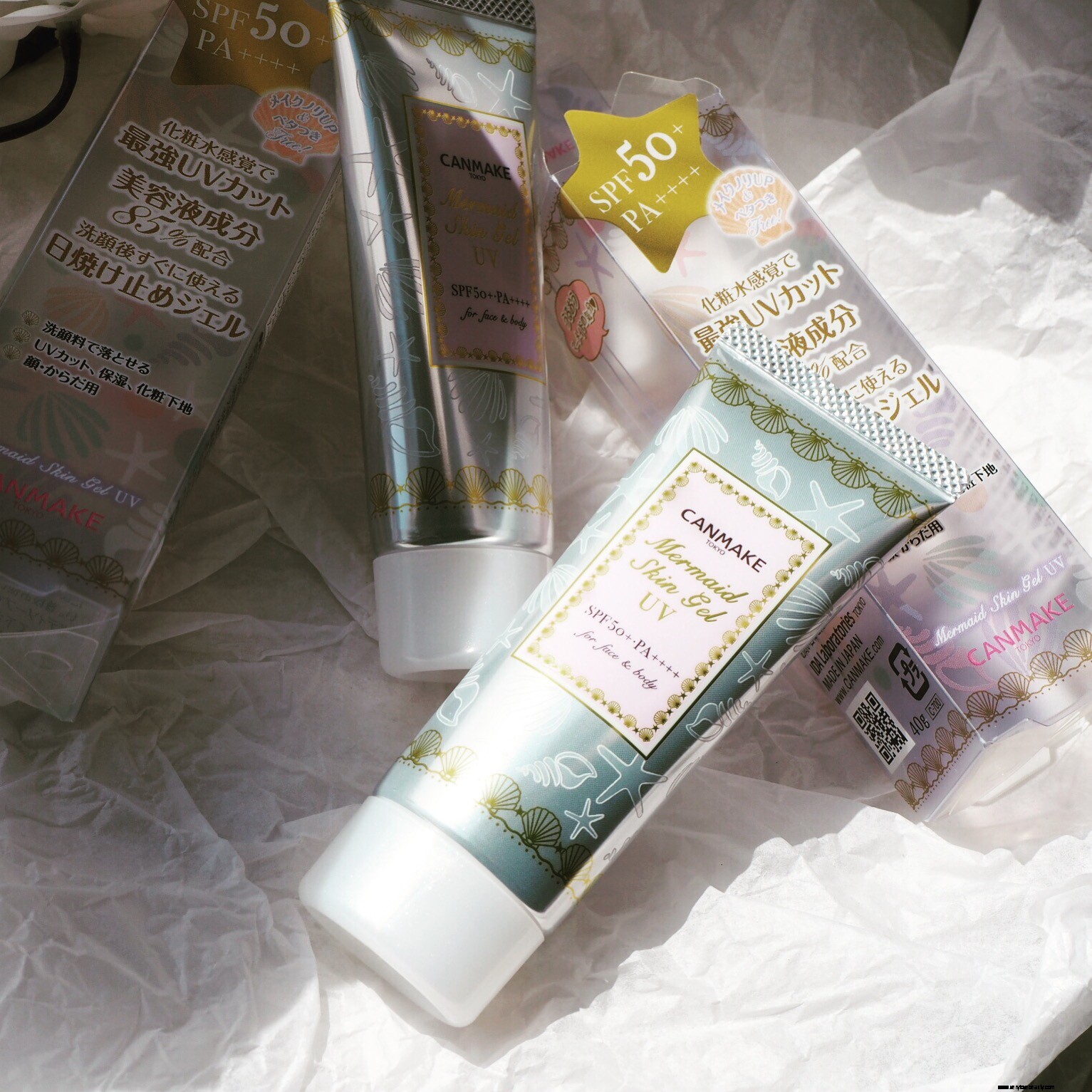
One mixed filter sunscreen I really like is Mermaid Gel by Canmake. I really recommend this one, it’s not a purely physical sunscreen but it has some modern chemical filters that work really well for filtering UVA- Uvinul A, Uvinul MC80 and Tinosorb S.
It’s the easiest sunscreen to wear that I have ever tried and never breaks me out. The finish is light and glowy with no white cast whatsoever. Mermaid gel isn’t expensive either- around £10 from Yesstyle. It’s perfect. The ingredients are pretty lovely too, according to Cosdna, nothing troubling. 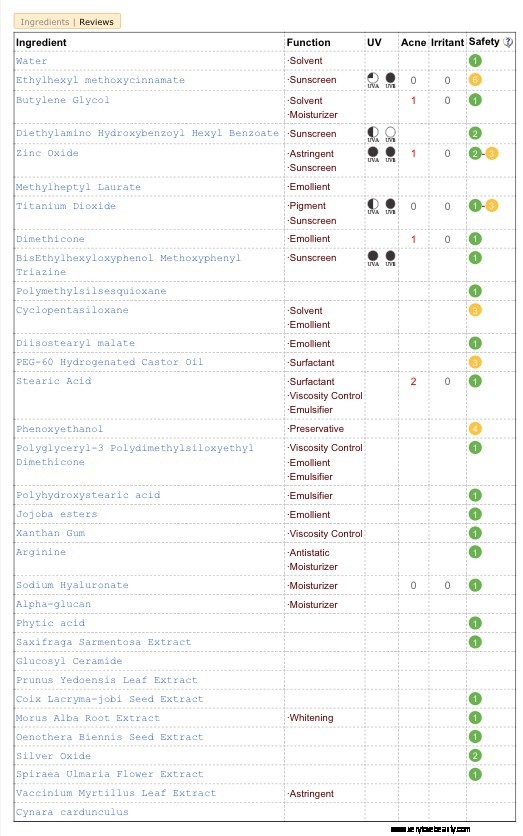
Another physical sunscreen that might prove useful for top ups is the Brush On Block Powder Sunscreen. Read my full review here. I also reviewed The Ordinary Mineral Filter SPF 30, but it’s god awful unless your skin is lily white.
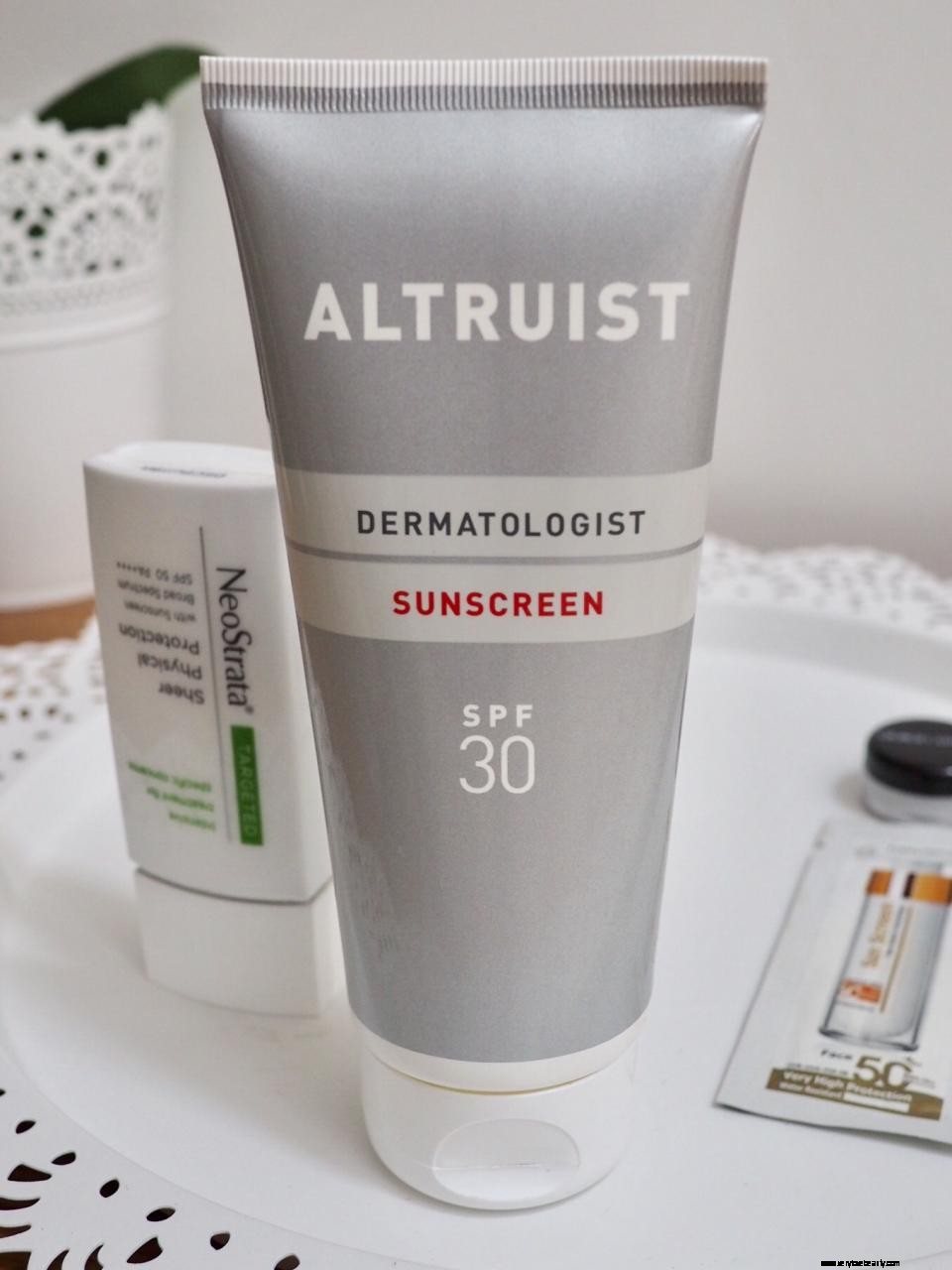
If you’re lucky and have normal skin that doesn’t react to anything or dry skin that doesn’t get on with Zinc Oxide, then you have a lot more choice when it comes to Sun protection products. These sunscreens have physical and chemical spf, blend seamlessly with the complexion, make a good base for makeup and don’t give a white cast.
There are a lot more chemical products to choose from and they are much cheaper. If your skin can’t take Octylcrylene and the like then you’ll be spending more money, unfortunately. Which is irritating as I’m sure Zinc Oxide isn’t expensive.
If you know of any amazing sunscreen products for oily, sensitive or acne prone skin that I have missed from my list please let me know. See also the EWG guide to being safe in the sun.