
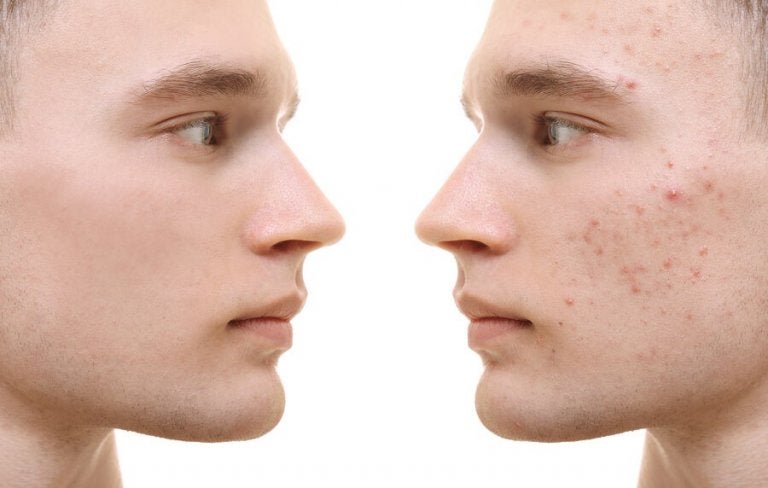
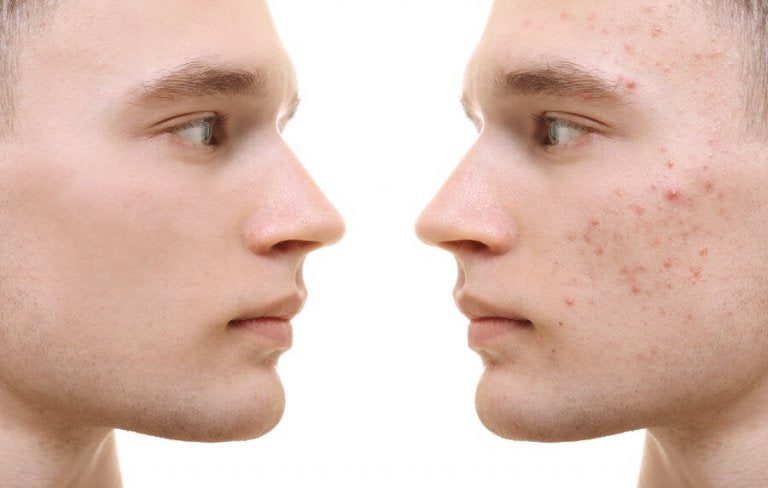
For many years, turmeric has been valued for its medicinal and cosmetic uses. While it’s normally used as a culinary ingredient, many people prefer to use it for its curative effects. Did you know that you can use turmeric to treat acne? Today we’ll tell you how.
Turmeric has a biologically active compound called curcumin, which gives it its characteristic color and a large part of its properties. This substance acts as an anti-inflammatory and antioxidant, making it useful both internally and topically.
So, it’s not surprising that its extracts are used in dermatology. Although research about its properties continues, it’s currently accepted as a natural remedy for problems like acne. Try it out!


There are various and interesting benefits of using turmeric to treat acne. First, it’s important to highlight its antibacterial properties capable of fighting microorganisms like P. acnes when combined with lauric acid. Its effect is comparable to pharmaceuticals like erythromycin and clindamycin.
On the other hand, this marvelous spice has anti-inflammatory effects that positively affect dermatological problems. Although we need more scientific evidence to verify its effect on acne, anecdotal evidence suggests that it’s effective.
Turmeric and its antioxidants also have other important effects when it comes to treating acne. Applying it topically helps repair tissue, minimizing the presence of scars. Likewise, it stimulates the production of collagen and reduces the risk of premature wrinkles.
Unlike other more conventional treatments, using turmeric for acne has other important effects on your skin’s health. Thanks to the curcumin, vitamins, and minerals it contains, it’s a good enhancement for your skin health. Among other benefits, turmeric:

To take full advantage of the properties of turmeric for treating acne, we propose a treatment in which we amplify its effect by using the components of coconut oil. This natural ingredient contains lauric acid, recognized for its antimicrobial effect, and useful for treating acne.
In addition, coconut oil has been widely studied in dermatology, since it hydrates the skin and helps treat illnesses like psoriasis and eczema. Like turmeric, it even helps the process of scarring and regeneration, minimizing the negative effects of free radicals.
Note: the results won’t be visible immediately. It’s important to use this remedy consistently to achieve the desired results.
Although this turmeric treatment can be very effective at removing acne, you should be aware that it can cause side effects. When you apply it topically it can temporarily stain the skin or leave a light, yellow residue. This usually disappears with a good cleaning.
However, sometimes the components can cause allergic reactions or contact dermatitis. A review carried out in 2015 found that curcumin is an allergen and can cause irritation, redness, and swelling in people who are allergic.
Due to the above, it’s best to do a small test before putting on the whole acne treatment. All you need to do is put a bit of turmeric on your forearm or another part of your skin. If, after 24 hours, there aren’t any negative reactions, then it’s safe to use.
Turmeric can be a great ally in the fight against acne, especially when you combine it with coconut oil. You should use it with caution, since it can cause an allergic reaction in some people. For everyone else, it’s a great option to support other conventional treatments to remove acne.